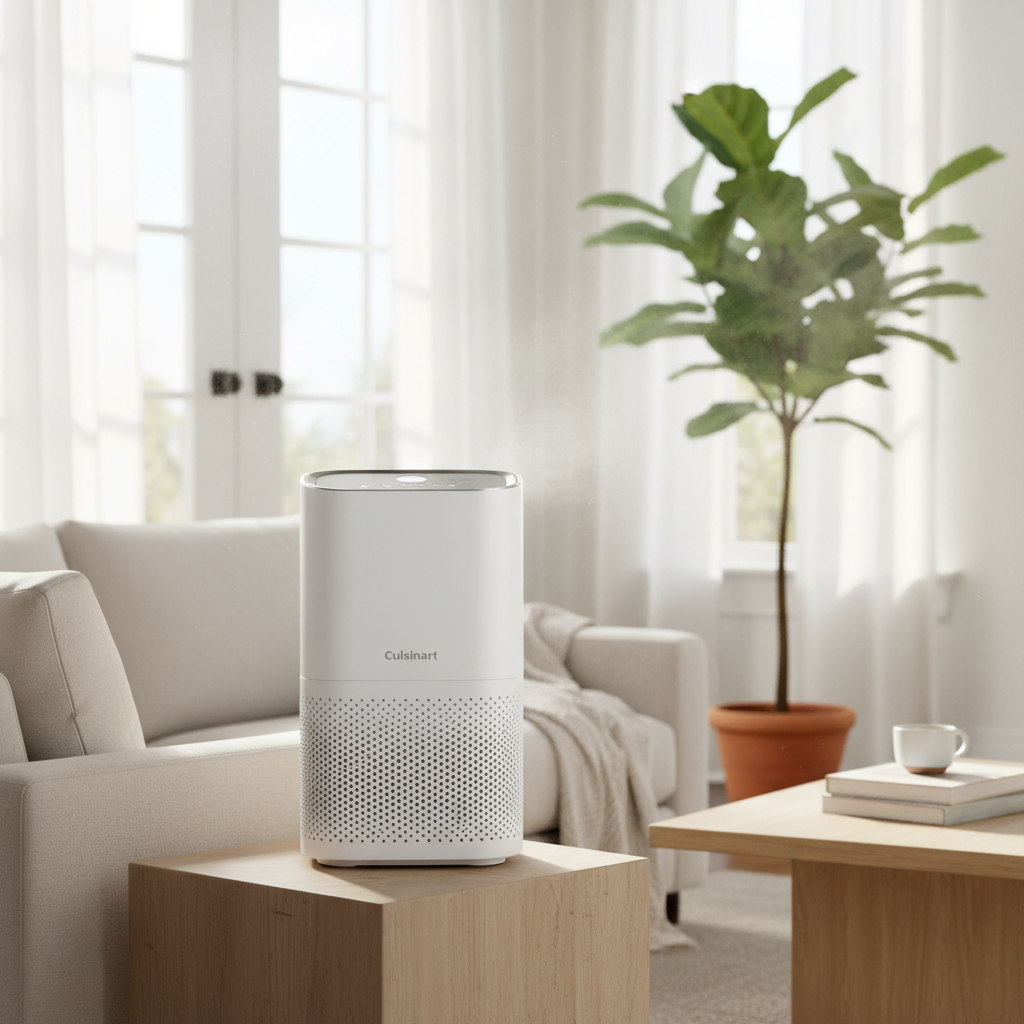
In a world increasingly concerned with indoor air quality, choosing the right air purifier has become paramount for many households. Among a vast sea of options, the Austin Air HealthMate has carved out a distinct reputation, often referred to as “the medical-grade” choice. This review delves deep into what makes the Austin Air HealthMate a formidable contender in the air purification market, exploring its core technology, performance, and overall value, to help you determine if this robust system is the ideal solution for your home or office.
Understanding Air Purifiers: A Foundation for Healthier Living
An air purifier is a device designed to remove contaminants from the air in a room, improving indoor air quality. These devices typically consist of one or more filters or methods to purify the air, effectively trapping or neutralizing airborne particles, allergens, odors, and even harmful gases. The fundamental principle involves drawing air into the unit, passing it through filtration stages, and then releasing cleaner air back into the environment.
The benefits of integrating an air purifier into your living or working space are extensive. For individuals suffering from allergies, asthma, or other respiratory conditions, a high-quality air purifier can significantly reduce symptoms by eliminating triggers like pollen, dust mites, pet dander, and mold spores. Beyond addressing specific health concerns, air purifiers contribute to overall well-being by removing unpleasant odors from cooking, pets, and smoke, and by reducing exposure to volatile organic compounds (VOCs) and other airborne pollutants that can impact long-term health. A cleaner indoor environment can lead to better sleep, improved concentration, and a general sense of freshness.
Key Technologies in Air Purification
The market offers a diverse range of air purifiers, each employing different technologies to cleanse the air. Understanding these can help appreciate the Austin Air HealthMate’s approach.
HEPA Air Purifiers
High-Efficiency Particulate Air (HEPA) filters are the gold standard for trapping airborne particles. They are designed to capture 99.97% of particles as small as 0.3 microns, including dust, pollen, pet dander, mold spores, and some bacteria and viruses.
- Pros: Exceptionally effective against particulate matter, widely recognized and trusted.
- Cons: Do not remove gases, odors, or VOCs; filters require periodic replacement and can be costly.
- Application: Ideal for allergy and asthma sufferers, and general particulate removal.
|
Our Picks for the Best Air purifier in 2026
As an Amazon Associate I earn from qualifying purchases.
|
||
| Num | Product | Action |
|---|---|---|
| 1 | Air Purifiers for Home Large Room, Cover Up to 2400 Ft² with True HEPA Filter, Smart Mode, PM2.5 Air Quality Display, 22dB Sleep Mode, Aromatherapy with 2X-Purification & 360°Air Outlet, HAP603 |

|
| 2 | LEVOIT Air Purifiers for Bedroom Home Dorm, AHAM VERIFIED, 3-in-1 Filter Cleaner With Aroma Pad, Filters Smoke, Allergens, Pet Dander, Odor, Dust, Office, Desktop, Core Mini-P, White |
|
| 3 | Air Purifiers for Home with High Efficiency Filter Up to 1076 Ft² for Pet Hair, Odors, Pollen, Smoke, Compact Air Cleaner with 3 Speeds, Timer, Aroma Quiet 360°Intake Filter, White |
|
| 4 | LEVOIT Air Purifier for Home Allergies Pet Hair in Bedroom, Covers Up to 1073 ft² by 56W High Torque Motor, AHAM VERIFIDE, 3-in-1 Filter with HEPA Sleep Mode, Remove Dust Smoke Odor, Core300-P, White |
|
| 5 | FreAire Air Purifiers for Bedroom Up to 1086 Ft², Air Purifiers for Home with Lights, HEPA Air Purifier Removes Dust Smoke Pollen Dander Smell, for Home/Pets/Bedroom |
|
| 6 | Air Purifiers for Home Large Room Cover Up to 1500 Ft² with True HEPA Filter, 20dB Sleep Mode, 360° Air Intake & Outlet, Air Cleaner for Bedroom Pets, 7 Color Light, HAP604, Bright White |
|
| 7 | LEVOIT Air Purifiers for Home Large Room Up to 1875 Ft² with Washable Pre-Filter, AHAM VERIFIDE, Air Quality Monitor, HEPA Sleep Mode for Allergies, Pet Hair in Bedroom, Vital 200S-P, White |
|
| 8 | LEVOIT Air Purifier for Home Bedroom Dorm Room, Smart & Voice Control, AHAM VERIFIED, 3-in-1 Filter With HEPA Sleep Mode, for Pollen, Pollutants, Smoke, Dander, Dust, Core 200S-P, White |
|
| 9 | LEVOIT Air Purifier for Home Large Room Up to 1073Ft² with Air Quality Monitor, AHAM VERIFIDE, Smart WiFi, Washable Pre-Filter, HEPA Sleep Mode for Pets, Allergies, Dust, Pollen, Vital 100S-P, White |
|
| 10 | KNKA Air Purifier for Home Bedroom Large Room Up to 1,695 Ft² in 1 Hr, HEPA Air Cleaner with Washable Pre-Filter, AHAM VERIFIDE, AQI Display, ECO Mode, Pet Mode for Pets, Dust, Pollen, APH4000 |
|
Activated Carbon Air Purifiers
Activated carbon filters are highly porous, allowing them to absorb odors, gases, and volatile organic compounds (VOCs) through a process called adsorption. The activated carbon chemically bonds with airborne pollutants.
- Pros: Excellent for removing smoke, cooking odors, pet smells, and chemical fumes.
- Cons: Not effective against particulate matter; eventually saturates and needs replacement.
- Application: Essential for homes with pets, smokers, or those sensitive to chemical odors.
Ionizing Air Purifiers
These purifiers release a cloud of charged ions into the air. These ions attach to airborne particles, giving them a charge, which then causes them to stick to nearby surfaces or to each other, making them heavy enough to fall out of the air.
- Pros: Can effectively remove very fine particles.
- Cons: Can produce ozone, a lung irritant, as a byproduct; particles may settle on surfaces rather than being removed from the room.
- Application: Generally used as a supplementary technology, with caution due to ozone production.
UV-C Light Air Purifiers
Ultraviolet germicidal irradiation (UVGI) uses UV-C light to destroy microorganisms such as bacteria, viruses, and mold spores by disrupting their DNA.
- Pros: Effective against biological contaminants.
- Cons: Does not remove particles, gases, or odors; requires careful design to prevent ozone generation; effectiveness can vary based on exposure time.
- Application: Useful in environments where biological contaminants are a primary concern, such as healthcare settings.
Combined Technology Air Purifiers
Many modern air purifiers integrate multiple technologies, leveraging the strengths of each. For example, a common combination is HEPA and activated carbon, offering comprehensive filtration against both particles and gases. This holistic approach often provides the most robust air purification.
Austin Air HealthMate: A Deep Dive into Medical-Grade Filtration
The Austin Air HealthMate distinguishes itself through its robust, multi-stage filtration system, focusing on what it calls “medical-grade” air purification. It does not rely on ionizers, UV-C lights, or other technologies that can potentially produce ozone. Instead, it commits to a tried-and-true, passive filtration method.
The HealthMate’s Filtration System
The core of the Austin Air HealthMate’s performance lies in its comprehensive 4-stage filter, designed for powerful and long-lasting air cleaning:
- Large Particle Pre-filter: This initial filter captures larger dust particles, hair, and pet dander, protecting the subsequent filters from premature clogging and extending their lifespan.
- Medium Particle Pre-filter: A second stage targets smaller, medium-sized particles before the air reaches the HEPA filter.
- Medical-Grade HEPA Filter: This is the cornerstone. The HealthMate utilizes 60 square feet of medical-grade HEPA material, capable of removing 99.97% of all airborne particles larger than 0.3 microns and 95% of particles as small as 0.1 microns. This includes pollen, dust mites, mold spores, and pet dander. The sheer volume of HEPA material contributes significantly to its efficacy and longevity.
- Activated Carbon and Zeolite Filter: This crucial stage contains 15 pounds of activated carbon and zeolite. This substantial bed is highly effective at adsorbing a wide range of gases, chemicals, odors, and Volatile Organic Compounds (VOCs), including smoke, fumes, and household chemicals. The large quantity of adsorbent material allows it to last for an extended period.
Performance and Efficacy
The combination of a massive HEPA filter and a substantial activated carbon/zeolite bed makes the HealthMate exceptionally effective across a broad spectrum of indoor air pollutants. It excels in environments where particulate matter, chemical sensitivities, and strong odors are prevalent. Users consistently report significant improvements in air quality, with noticeable reductions in allergy and asthma symptoms, and the elimination of persistent household odors. Its robust build and powerful motor allow it to effectively clean air in larger spaces, cycling the air multiple times per hour.
Build Quality and Design
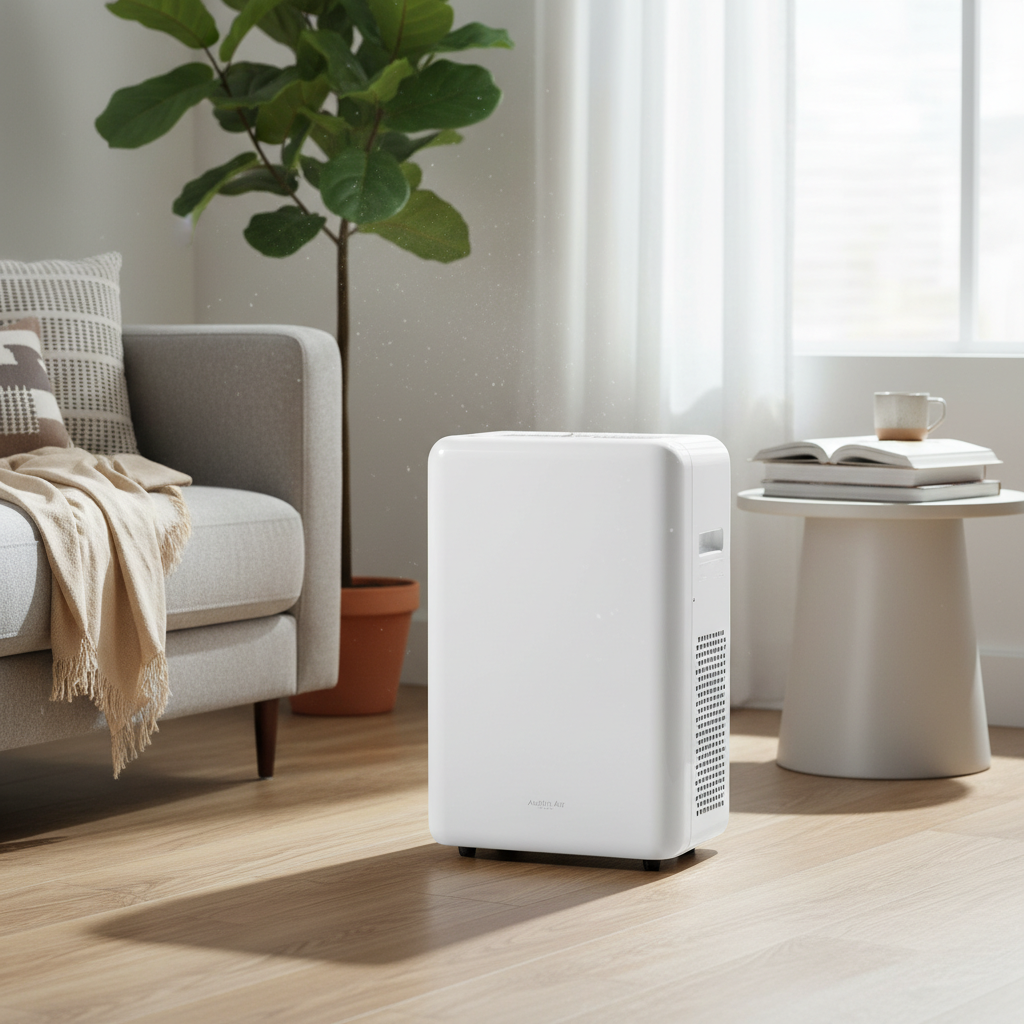
Austin Air purifiers are known for their sturdy, all-steel construction, a stark contrast to the plastic casings common in many competitors. This metal housing ensures durability and prevents off-gassing, which can be an issue with some plastic units. The HealthMate features 360-degree air intake, drawing air from all sides of the unit, which contributes to its efficiency in cleaning entire rooms. The design is utilitarian and functional rather than overtly stylish, emphasizing performance and longevity.
Comparison: Austin Air HealthMate vs. Other Technologies
| Feature | Austin Air HealthMate (HEPA + Carbon) | Ionizing Purifiers | UV-C Purifiers | Combined HEPA+Carbon (Basic) |
|---|---|---|---|---|
| Particle Removal | Excellent (Medical-Grade HEPA) | Good (but particles settle) | None | Good |
| Gas/Odor Removal | Excellent (15 lbs Activated Carbon) | None | None | Moderate (less carbon) |
| Chemical Removal | Excellent | None | None | Moderate |
| Biological Agents | Good (traps bacteria/viruses) | Moderate | Excellent (destroys) | Good |
| Ozone Production | None | Possible (Harmful) | Possible (Harmful) | None |
| Filter Lifespan | Very Long (up to 5 years) | N/A | Bulb replacement often | Shorter (6-12 months) |
| Maintenance Cost | Low (infrequent filter changes) | Low | Moderate (bulb cost) | Moderate-High |
| Noise Level | Moderate to High (on max setting) | Low | Low | Varies |
| Initial Price | High | Low | Low-Moderate | Moderate |
Crucial Considerations When Choosing an Air Purifier
Selecting the right air purifier requires careful thought, especially when investing in a medical-grade unit like the HealthMate.
Room Size and CADR
The size of your room dictates the required power of your air purifier. Look for the Clean Air Delivery Rate (CADR), which indicates how quickly the purifier removes smoke, pollen, and dust from a room. The Austin Air HealthMate is designed for larger spaces, typically effective for rooms up to 1500 square feet, depending on ceiling height and desired air changes per hour (ACH). Ensure the unit’s capacity matches or exceeds your room’s dimensions for optimal performance.
Filter Types and Pollutant Removal Capabilities
As discussed, different filters target different pollutants. The HealthMate’s strength lies in its comprehensive approach to both particles (HEPA) and gases/odors (activated carbon/zeolite). If your primary concern is specific to biological agents, other technologies might be considered, but for general indoor air quality and chemical sensitivities, the HealthMate’s setup is highly effective.
Noise Level
Air purifiers contain fans, and fans make noise. The Austin Air HealthMate operates with three fan speeds. On its lowest setting, it’s relatively quiet and suitable for bedrooms. At higher settings, the fan noise becomes more noticeable. Consider where the unit will be placed and your personal sensitivity to background noise.
Additional Features
While the HealthMate is a no-frills workhorse, focusing solely on filtration, some purifiers offer smart features like:
- Dust Sensors: Automatically adjust fan speed based on air quality.
- Timers: Program operation times.
- Remote Control/Smart Connectivity: For convenience.
The HealthMate does not include these advanced features, prioritizing robust, continuous filtration over smart connectivity.
Brand Reputation and Reliability
Austin Air has a long-standing reputation for producing durable, high-performance air purifiers. Their commitment to medical-grade filtration and heavy-duty construction has earned them trust among allergy sufferers and those with severe chemical sensitivities. The company’s focus on essential filtration components contributes to its reliability.
Price and Warranty
The Austin Air HealthMate represents a significant upfront investment. However, its long-lasting filter (up to 5 years, depending on usage) translates to lower recurring costs compared to units requiring frequent filter replacements. Austin Air offers an industry-leading 5-year mechanical warranty and a 5-year pro-rated filter warranty, underscoring their confidence in product longevity. This long-term value proposition is a key selling point.
Buying Guide: Is the Austin Air HealthMate Right for You?
Choosing an air purifier, particularly a premium model like the Austin Air HealthMate, involves aligning its capabilities with your specific needs.
Identify Your Usage Needs
- Allergies/Asthma Sufferers: The medical-grade HEPA filter is highly effective at removing common triggers like pollen, dust mites, pet dander, and mold spores.
- Chemical Sensitivities/VOCs: The massive activated carbon bed is excellent for adsorbing a wide array of chemicals, fumes, and odors. If you live near industrial areas, have new furniture, or suffer from MCS (Multiple Chemical Sensitivity), this is a strong benefit.
- Pet Owners: Effectively tackles pet dander and odors.
- Smokers/Smoke Exposure: Highly capable of removing smoke particles and odors, though heavy smoke environments may reduce filter life.
- General Air Quality Improvement: For anyone seeking a significant upgrade in indoor air freshness and purity.
Match Air Purifier Type to Room Size
Confirm the HealthMate’s recommended coverage area aligns with your room. If you have multiple smaller rooms, you might need more than one unit, or consider a smaller Austin Air model for specific areas.
Understand Filtration Technologies
Be comfortable with the HealthMate’s HEPA and activated carbon approach. If you specifically need UV-C for germicidal reasons (e.g., in a clinical setting), you might consider a supplementary unit, but for broad-spectrum household air purification, the HealthMate’s passive filtration is highly effective and avoids potential ozone issues.
Compare Features, Price, and Brand
While the HealthMate lacks “smart” features, its robust filtration and durability are its main selling points. When comparing, weigh the long-term filter costs and warranty against the initial purchase price. For critical applications, the HealthMate’s medical-grade status is a strong differentiator.
Read User Reviews and Expert Opinions
User testimonials frequently highlight the HealthMate’s effectiveness in managing allergies and odors. Expert reviews often laud its sturdy construction and powerful filtration system, reinforcing its reputation as a reliable, long-term investment.
Purchase from Reputable Retailers
To ensure you receive an authentic product with full warranty coverage, purchase your Austin Air HealthMate directly from the manufacturer or an authorized dealer.
How to Use and Maintain Your Austin Air HealthMate
To maximize the performance and longevity of your Austin Air HealthMate, proper usage and maintenance are key.
Effective Usage
- Placement: Position the unit in the room where air quality is most critical. For optimal circulation, avoid placing it directly against a wall or in a corner; ideally, allow some space around it for 360-degree air intake.
- Continuous Operation: For the best results, run your HealthMate continuously, especially at a lower speed. Air pollution is ongoing, and continuous filtration ensures consistent air quality.
- Fan Speed: Use higher fan speeds when initial air quality is poor (e.g., after cooking, during high pollen counts) or when rapidly purifying a room. Once air quality improves, switch to a lower, quieter setting for maintenance.
- Close Windows and Doors: For maximum efficiency, keep windows and doors closed in the room where the purifier is operating to prevent outside pollutants from re-entering.
Routine Cleaning and Filter Replacement
The Austin Air HealthMate is designed for low maintenance.
- Exterior Cleaning: Periodically wipe down the exterior of the unit with a damp cloth to remove accumulated dust. Ensure the unit is unplugged before cleaning.
- Filter Replacement: This is the most significant maintenance task. The HealthMate’s filter typically lasts up to five years under normal residential use. This exceptional lifespan is a major advantage. You’ll know it’s time to replace the filter when you notice a decrease in air purification effectiveness, increased odors, or a noticeable reduction in airflow. Unlike some systems, you replace the entire 4-stage filter cartridge as a single unit, which simplifies the process.
Important Usage Notes
- Avoid Blockages: Ensure the air intake and output vents are clear of obstructions like curtains, furniture, or other objects that could impede airflow.
- No Washing Filters: Do not attempt to wash or clean the HEPA or activated carbon filters. This will damage them and render them ineffective.
- Handle with Care: While robust, handle the unit carefully during placement or filter changes.
“The Austin Air HealthMate represents a steadfast commitment to foundational air purification principles. Its sheer volume of filter media—both medical-grade HEPA and activated carbon—provides an unparalleled level of filtration without resorting to potentially harmful secondary technologies. It’s a true workhorse designed for longevity and consistent performance.” – Dr. Eleanor Vance, Environmental Health Specialist.
Conclusion
The Austin Air HealthMate stands as a testament to effective, no-compromise air purification. Its medical-grade HEPA filter, combined with a substantial activated carbon and zeolite bed, offers robust protection against a wide array of airborne particles, chemicals, gases, and odors. While it commands a premium price and lacks smart features, its exceptional filter lifespan, durable all-steel construction, and consistent performance deliver significant long-term value and peace of mind for those prioritizing superior indoor air quality.
For individuals contending with allergies, asthma, chemical sensitivities, or simply seeking to dramatically improve the air they breathe daily, the Austin Air HealthMate proves itself as a worthy and reliable investment. It’s not just an air purifier; it’s a commitment to a healthier living environment. Is the peace of mind from breathing truly clean air worth the investment for your home?
Frequently Asked Questions
What does “Medical Grade” mean for an air purifier?
For the Austin Air HealthMate, “medical grade” refers to its HEPA filter’s ability to remove 99.97% of airborne particles as small as 0.3 microns, a standard often used in healthcare settings. It signifies a high level of efficiency in removing very fine particulate matter that can impact health.
How often do I need to change the Austin Air HealthMate filter?
The Austin Air HealthMate filter is designed to last up to five years under normal residential use. This lifespan can vary depending on the severity of air pollution in your environment and how frequently the unit is operated.
Does the Austin Air HealthMate produce ozone?
No, the Austin Air HealthMate does not produce ozone. It relies solely on mechanical filtration (HEPA and activated carbon) and does not incorporate technologies like ionizers or UV-C lights, which can sometimes generate ozone as a byproduct.
Is the Austin Air HealthMate suitable for large rooms?
Yes, the Austin Air HealthMate is specifically designed for larger spaces. It is typically effective in rooms up to 1500 square feet, providing multiple air changes per hour to maintain excellent air quality.
Can the Austin Air HealthMate remove pet odors and dander?
Absolutely. Its medical-grade HEPA filter effectively captures pet dander, while the substantial activated carbon bed is highly efficient at adsorbing and eliminating pet odors, leaving your home smelling fresher.