In a world increasingly aware of indoor air quality, finding effective and affordable solutions to breathe cleaner air has become a priority for many. From seasonal allergens and everyday dust to more concerning airborne pollutants like wildfire smoke and viruses, the air inside our homes and offices can often be more contaminated than we realize. While commercial air purifiers offer a solution, their cost can be prohibitive for some budgets. This is where the ingenious Corsi-Rosenthal Box air purifier comes in – a remarkably effective, budget-friendly, and easy-to-build DIY device designed to significantly improve your indoor air.
Understanding the Corsi-Rosenthal Box Air Purifier
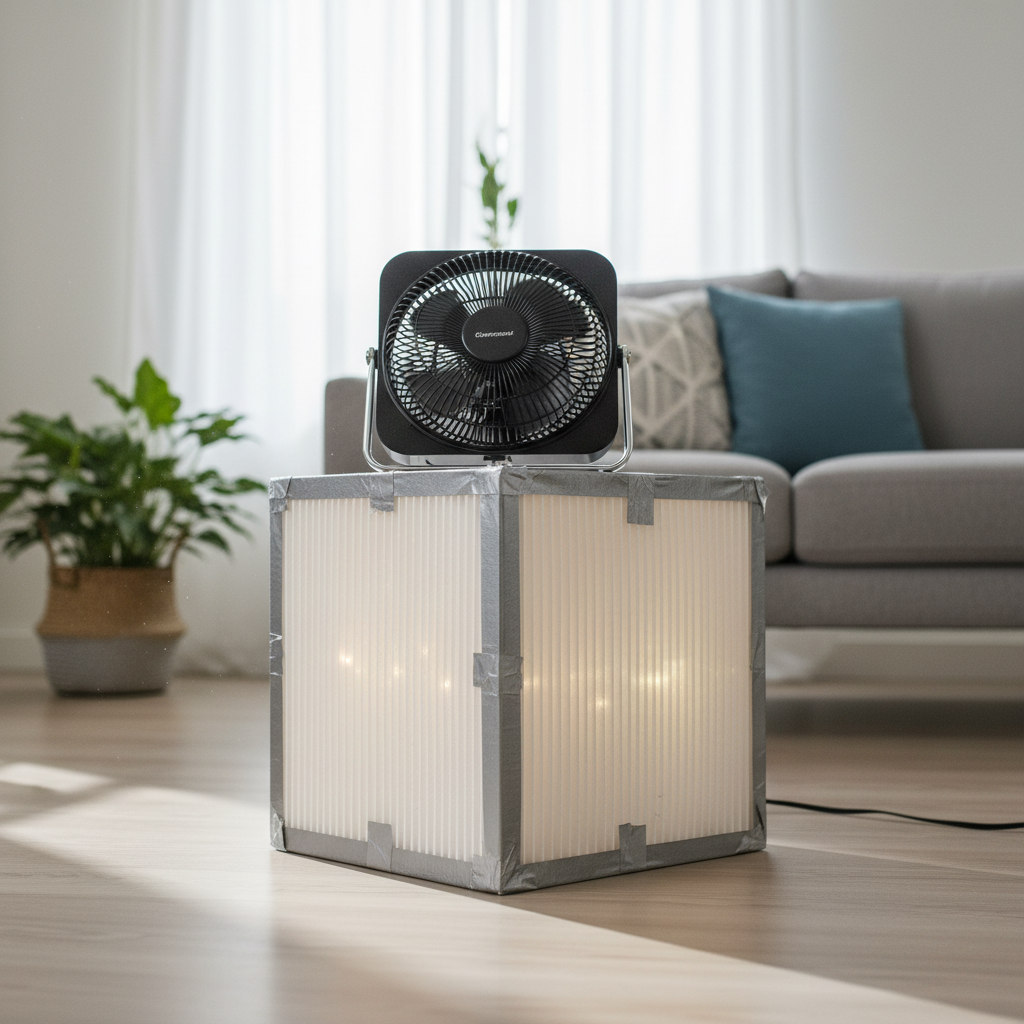
At its heart, the Corsi-Rosenthal Box is a simple yet powerful air cleaning system. It consists of multiple high-efficiency air filters arranged around a standard box fan, creating a cube or rectangular shape. The fan draws air through the filters, which trap microscopic particles, and then expels cleaner air back into the room. This straightforward design was developed by engineers Richard Corsi and Jim Rosenthal during the COVID-19 pandemic as an accessible way to reduce airborne viral particles, and its effectiveness has since been widely recognized for tackling a variety of indoor air contaminants.
The primary benefit of using a Corsi-Rosenthal Box is its exceptional cost-effectiveness coupled with impressive performance. Studies have shown these DIY units can achieve clean air delivery rates (CADR) comparable to, or even exceeding, some commercial air purifiers, often at a fraction of the price. Whether you’re dealing with pet dander, pollen, dust, mold spores, wildfire smoke, or even airborne viruses and bacteria, a properly constructed Corsi-Rosenthal Box provides a powerful barrier, transforming stale, particle-laden air into a fresher, healthier environment.
Essential Components for Your DIY Air Purifier
Building a Corsi-Rosenthal Box requires only a few readily available materials. The quality and type of these components directly influence the purifier’s efficiency and longevity.
MERV 13 Filters: Your First Line of Defense
|
Our Picks for the Best Air purifier in 2026
As an Amazon Associate I earn from qualifying purchases.
|
||
| Num | Product | Action |
|---|---|---|
| 1 | Air Purifiers for Home Large Room Cover Up to 1500 Ft² with True HEPA Filter, 20dB Sleep Mode, 360° Air Intake & Outlet, Air Cleaner for Bedroom Pets, 7 Color Light, HAP604, Bright White |

|
| 2 | Air Purifiers for Home with High Efficiency Filter Up to 1076 Ft² for Pet Hair, Odors, Pollen, Smoke, Compact Air Cleaner with 3 Speeds, Timer, Aroma Quiet 360°Intake Filter, White |
|
| 3 | Air Purifiers for Home Large Room, Cover Up to 2400 Ft² with True HEPA Filter, Smart Mode, PM2.5 Air Quality Display, 22dB Sleep Mode, Aromatherapy with 2X-Purification & 360°Air Outlet, HAP603 |
|
| 4 | LEVOIT Air Purifier for Home Large Room Up to 1073Ft² with Air Quality Monitor, AHAM VERIFIDE, Smart WiFi, Washable Pre-Filter, HEPA Sleep Mode for Pets, Allergies, Dust, Pollen, Vital 100S-P, White |
|
| 5 | LEVOIT Air Purifier for Home Bedroom Dorm Room, Smart & Voice Control, AHAM VERIFIED, 3-in-1 Filter With HEPA Sleep Mode, for Pollen, Pollutants, Smoke, Dander, Dust, Core 200S-P, White |
|
| 6 | KNKA Air Purifier for Home Bedroom Large Room Up to 1,695 Ft² in 1 Hr, HEPA Air Cleaner with Washable Pre-Filter, AHAM VERIFIDE, AQI Display, ECO Mode, Pet Mode for Pets, Dust, Pollen, APH4000 |
|
| 7 | LEVOIT Air Purifier for Home Allergies Pet Hair in Bedroom, Covers Up to 1073 ft² by 56W High Torque Motor, AHAM VERIFIDE, 3-in-1 Filter with HEPA Sleep Mode, Remove Dust Smoke Odor, Core300-P, White |
|
| 8 | FreAire Air Purifiers for Bedroom Up to 1086 Ft², Air Purifiers for Home with Lights, HEPA Air Purifier Removes Dust Smoke Pollen Dander Smell, for Home/Pets/Bedroom |
|
| 9 | LEVOIT Air Purifiers for Bedroom Home Dorm, AHAM VERIFIED, 3-in-1 Filter Cleaner With Aroma Pad, Filters Smoke, Allergens, Pet Dander, Odor, Dust, Office, Desktop, Core Mini-P, White |
|
| 10 | LEVOIT Air Purifiers for Home Large Room Up to 1875 Ft² with Washable Pre-Filter, AHAM VERIFIDE, Air Quality Monitor, HEPA Sleep Mode for Allergies, Pet Hair in Bedroom, Vital 200S-P, White |
|
The core of any effective air purifier lies in its filtration system, and for the Corsi-Rosenthal Box, MERV 13 filters are the standard. MERV stands for Minimum Efficiency Reporting Value, and a MERV 13 rating indicates that the filter is highly effective at capturing airborne particles ranging from 0.3 to 10 microns. This includes common pollutants like pollen, dust mites, pet dander, mold spores, and even bacteria and virus carriers.
You will typically need four or five filters, depending on your chosen design (a four-filter cube or a five-filter rectangular box). The most common size is 20″x20″, and filters are available in 1-inch or 2-inch thickness. While 1-inch filters are generally more affordable, 2-inch filters can offer slightly better airflow and last longer due to having more filter media. Always check the airflow arrow on each filter and ensure it points inward towards the fan.
The Box Fan: The Engine of Airflow
A standard 20-inch box fan serves as the motor for your Corsi-Rosenthal Box. The fan’s primary role is to pull air through the MERV 13 filters and circulate clean air back into the room. Look for a fan that fits well with your chosen filter size, typically a 20″x20″ or 20″x24″ model. The fan’s power and design are critical for maximizing airflow through the filters. While many brands work, Lasko and Utilitech fans are frequently mentioned in DIY guides.
Sealing and Support Materials: Ensuring Optimal Performance
To ensure all air passes through the filters and not around them, effective sealing is paramount. You will need:
- Duct Tape: This is arguably the most crucial auxiliary material. You will need a significant amount to create airtight seals between the filters and between the filters and the fan. Choose a strong, wide duct tape for the best results.
- Cardboard: The packaging from your box fan is often perfect for this. You’ll need a piece to create a sturdy base for the filter cube and potentially another piece to fashion an optional fan shroud.
- Scissors or Utility Knife: Essential for cutting cardboard and duct tape precisely.
Step-by-Step Guide: How to Construct Your Corsi-Rosenthal Box
Building a Corsi-Rosenthal Box is a straightforward process that can typically be completed in under an hour. Follow these steps to create your own effective air purification system.
Gathering Your Materials
Before you begin, ensure you have all the necessary components laid out in a clear workspace:
- Four or five MERV 13 air filters (20″x20″x1″ or 20″x20″x2″ are common choices)
- One 20-inch box fan
- At least one roll of strong duct tape
- A piece of sturdy cardboard (often found in the fan’s packaging)
- Scissors or a utility knife
Assembling the Filter Cube
The first step is to construct the filter housing. Unwrap your MERV 13 filters and inspect them for any damage. Note the airflow arrow printed on the frame of each filter; these arrows must all point inward when assembled.
- Stand two filters upright, side by side, with their airflow arrows pointing towards each other.
- Use duct tape to securely join these two filters along their meeting edges. Press firmly to create a tight seal.
- Repeat this process with the remaining two filters, creating two pairs.
- Now, connect these two pairs to form a four-sided cube. Ensure all airflow arrows point inward, forming an enclosed space. Use generous amounts of duct tape to seal all seams where the filters meet, both inside and out, to prevent air from bypassing the filter media. The goal is to make an airtight cube where the only path for air is through the filters.
Adding the Base and Fan
Once your filter cube is securely taped, it’s time to add the base and position the fan.
- Cut a piece of cardboard to match the size of one open side of your filter cube. This will serve as the bottom base. Tape this cardboard piece securely to the bottom edges of the filter cube, again ensuring a complete, airtight seal.
- Place the box fan on top of the remaining open side of the filter cube. The fan should sit flat on the top edges of the filters, with the fan blades oriented to blow air upward and out of the box. This creates a suction effect, pulling air through the filters.
- Carefully align the fan so its edges overlap the filter edges, and then tape the fan securely to the top of the filter cube. Pay close attention to sealing any gaps around the fan’s perimeter, especially near the power cord, to prevent air leakage. A tight seal ensures maximum filtration efficiency.
The Optional Fan Shroud: Boosting Performance and Reducing Noise
For those looking to optimize their Corsi-Rosenthal Box, adding a fan shroud is a valuable enhancement. A shroud is a piece of cardboard placed on top of the fan, with a circular opening cut out, that helps direct airflow more efficiently and can even reduce noise.
- Take another piece of cardboard (the other side of the fan’s box is usually ideal) and place it over the top of the fan.
- Trace a circle in the center of the cardboard, matching the diameter of the fan’s blades or slightly smaller (e.g., 15 inches for Lasko fans, 13.5-14.25 inches for Utilitech fans, based on common recommendations).
- Cut out this circle carefully with a utility knife.
- Tape this cardboard shroud securely to the top of the fan, ensuring the circular opening is centered over the fan blades. The shroud helps prevent air from recirculating inefficiently and can slightly boost the clean air delivery rate while potentially making the unit quieter.
Performance and Efficacy of the Corsi-Rosenthal Box
The Corsi-Rosenthal Box is celebrated not just for its simplicity but also for its remarkable effectiveness in improving indoor air quality. This DIY device has been rigorously tested and widely adopted due to its ability to significantly reduce airborne contaminants.
Particle Removal Capabilities
Research and informal testing have consistently demonstrated the Corsi-Rosenthal Box’s powerful particle removal capabilities. It excels at filtering out a wide range of particulate matter, including:
- Dust and Allergens: The MERV 13 filters are highly efficient at capturing common household dust, pollen, pet dander, and mold spores, which are major triggers for allergies and asthma.
- Wildfire Smoke: During periods of poor outdoor air quality due to wildfires, the box effectively removes the fine particulate matter (PM2.5) that makes smoke hazardous to breathe. It can clear a significant percentage of smoke particles in a relatively short amount of time.
- Viruses and Bacteria: Crucially, studies have shown that the Corsi-Rosenthal Box can effectively reduce airborne viral particles, including SARS-CoV-2 (the virus causing COVID-19). While not a substitute for masks, it significantly lowers the concentration of infectious aerosols in indoor spaces, adding an important layer of protection.
- Other Pollutants: Some studies even suggest these boxes can help reduce levels of certain chemical pollutants like PFAS and phthalates, common indoor air contaminants.
Clean Air Delivery Rate (CADR)
The Clean Air Delivery Rate (CADR) measures how quickly an air purifier removes pollutants from a room. Corsi-Rosenthal Boxes have been shown to have impressive CADR values, often comparable to residential portable air purifiers that cost several times more. For instance, a four-filter, two-inch MERV 13 design can achieve a CADR of 600 to 850 cubic feet per minute, depending on fan speed. This performance translates to a significantly lower cost per CADR compared to commercial units, making them an incredibly economical choice for effective air purification.
“The ability of a Corsi-Rosenthal Box to rapidly clean the air of fine particulates is an astounding achievement for a DIY solution. It democratizes access to cleaner indoor environments.” – Dr. Alistair Finch, Environmental Health Specialist
Real-world Impact
Beyond laboratory tests, real-world applications have underscored the value of Corsi-Rosenthal Boxes. Many individuals and organizations, including schools and community centers, have adopted them as an immediate and impactful solution for improving ventilation and air quality. Anecdotal reports often highlight noticeable improvements in air freshness, a reduction in odors, and a significant decrease in visible dust, demonstrating their tangible benefits in everyday settings.
Optimizing Placement, Usage, and Safety
To get the most out of your Corsi-Rosenthal Box and ensure safe operation, consider these guidelines for placement and usage.
Ideal Placement for Maximum Airflow
Strategic placement can significantly enhance your unit’s performance. Position your Corsi-Rosenthal Box near the center of the room you wish to purify. This allows the clean air to circulate more evenly throughout the space. Avoid placing it directly against walls or tucked into corners, as this can restrict airflow and reduce its efficiency. Raising the box slightly off the floor (e.g., on a small table or stand) can also help improve air circulation by allowing better intake from all sides and more effective distribution of clean air.
Safe Operation Guidelines
While generally safe, a few precautions ensure your DIY air purifier operates without issues.
- Fan Orientation: Always ensure the box fan is oriented to blow air upward. This draws air through the side filters effectively and pushes clean air into the room.
- Cord Management: Tape down the power cord to prevent tripping hazards.
- Stable Surface: Place the unit on a stable, level surface where it won’t easily tip over. Accidental impact could damage the filters or break the seals, compromising its effectiveness.
- Avoid Obstructions: Do not block the fan’s exhaust or the filter intake sides. Keep objects clear of the fan blades.
- Environmental Hazards: Do not operate the air cleaner near water sources or in areas with flammable solvents.
- Unsupervised Use: While generally safe for continuous operation, if you plan to leave the room unoccupied for extended periods, especially in a school or community setting, consider turning the unit off. Regularly check the unit for any unusual sounds or smells during operation.
Noise and Energy Considerations
Corsi-Rosenthal Boxes can be louder than some commercial air purifiers, especially on higher fan settings, as they use standard box fans. However, their effectiveness often outweighs this drawback.
- Fan Speed: Use a lower or medium fan speed for a quieter operation. Even on these settings, the box can still be highly effective at cleaning the air, making it suitable for bedrooms or quieter living spaces. This also reduces power consumption.
- Energy Efficiency: While the fan consumes electricity, the overall cost per CADR remains significantly lower than many commercial units. Opting for lower fan settings can further reduce energy usage.
- Shroud Impact: The optional fan shroud can help reduce noise levels and improve efficiency by streamlining airflow.
Maintaining Your Corsi-Rosenthal Box for Long-Term Performance
Regular maintenance is key to ensuring your Corsi-Rosenthal Box continues to deliver clean air efficiently. The main task involves inspecting and replacing the air filters.
When and How to Replace Filters
The lifespan of your MERV 13 filters depends on several factors, including how often the unit runs and the general air quality of your environment.
- Indicators for Replacement: Visually inspect your filters regularly. They will typically change color from white to light brown or gray as they collect particles. If you notice a significant decrease in airflow or visible discoloration, it’s time for a change.
- Frequency: Filters generally last between 3 to 6 months with regular use, but in very dusty or smoky environments, they might need replacement sooner. In cleaner environments, they could last up to a year. It’s recommended to replace all filters simultaneously to maintain optimal performance.
- Disposal: When replacing filters, unplug the unit and allow it to sit for a day or two to settle any captured particles. Carefully remove the duct tape, detach the old filters, and fold them into a large plastic garbage bag for disposal. It’s advisable to wear a mask during this process as a precaution.
Fan Care
The box fan itself requires minimal maintenance. Periodically wipe down the fan’s surface to remove any accumulated dust. The beauty of the Corsi-Rosenthal design is that the fan is reusable. When filters need replacing, you simply discard the old filter cube and build a new one around your existing fan, making it a sustainable and cost-effective air purification solution.
Conclusion
The Corsi-Rosenthal Box air purifier stands out as an exceptionally effective, affordable, and accessible solution for anyone seeking to improve indoor air quality. By harnessing the power of readily available MERV 13 filters and a standard box fan, this DIY device provides robust protection against a wide array of airborne pollutants, from common allergens to microscopic viruses. Building one is a rewarding project that empowers you to take control of your breathing environment without breaking the bank. With a simple construction process and straightforward maintenance, the Corsi-Rosenthal Box offers a powerful way to ensure the air you and your loved ones breathe is cleaner and healthier. Why wait to transform your indoor air quality?