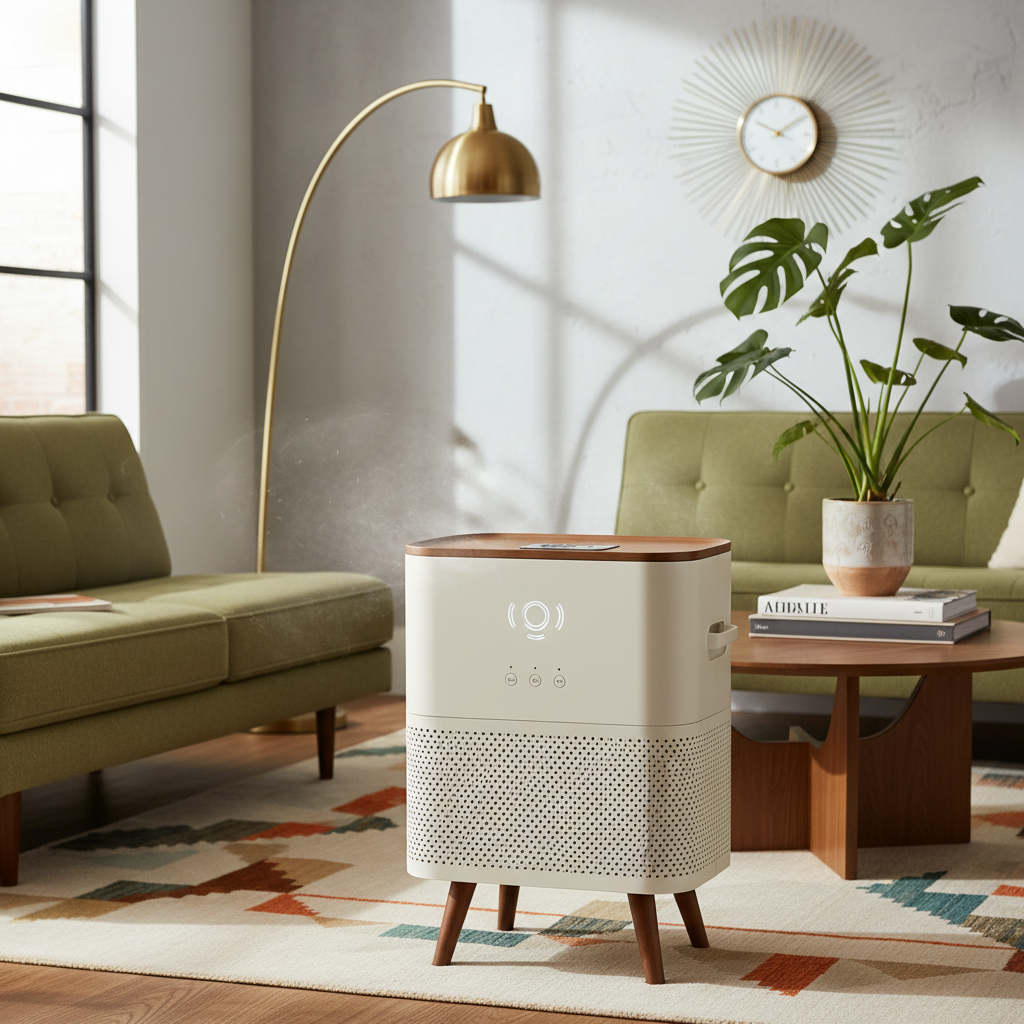
In our increasingly digital world, printers and 3D printing technology have become indispensable tools in homes, offices, and maker spaces. While these innovations offer immense utility and unleash creativity, they also introduce a less visible challenge: compromised indoor air quality. Whether you’re a professional engineer, a hobbyist 3D printer, or simply using a laser printer in your home office, understanding and mitigating airborne pollutants is paramount for your health and well-being. This comprehensive guide will navigate the complex world of printer emissions, unveil the crucial role of air purifiers, and equip you with the knowledge to select the best solution for a healthier printing environment.
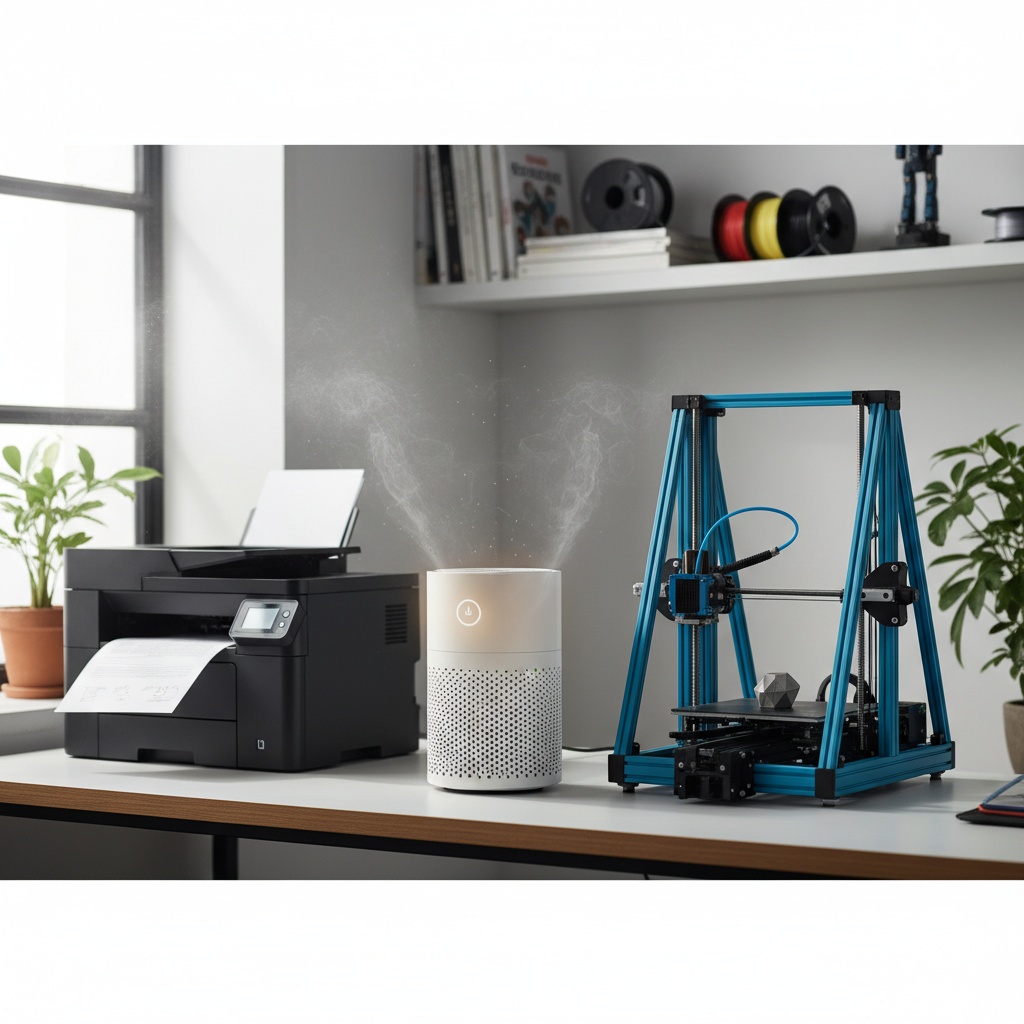
Overview of Air Purifiers
An air purifier is a device designed to remove contaminants from the air in a room, thereby improving indoor air quality. These devices typically draw in ambient air, pass it through a series of filters that capture pollutants, and then release cleaner air back into the space. The primary benefit of using an air purifier, especially in environments with active printers, is to significantly reduce exposure to harmful particles and gases, safeguarding respiratory health and overall comfort.
Types of Air Purifiers for Printer Emissions
Selecting the right air purifier for your printing setup requires understanding the specific pollutants emitted and how different technologies address them. Printers, particularly 3D printers and laser printers, release a distinct cocktail of airborne contaminants. Therefore, a specialized approach to air purification is essential.
HEPA Air Purifiers
HEPA (High-Efficiency Particulate Air) filters are the cornerstone of particle removal in air purification. They are highly effective at trapping ultrafine particles (UFPs) and other airborne particulates, which are significant emissions from both laser and 3D printers.
- Advantages: True HEPA filters (H13 or H14) can capture 99.97% of particles as small as 0.3 microns, including dust, pollen, pet dander, mold spores, and the microscopic plastic particles from 3D printing or toner dust from laser printers. This high efficiency makes them indispensable for removing solid airborne contaminants.
- Disadvantages: While excellent for particles, HEPA filters are not designed to remove gases, volatile organic compounds (VOCs), or odors. Their performance can degrade over time as filters become clogged, requiring regular replacement.
- Applications: Ideal for mitigating ultrafine particles (UFPs) from both FDM (Fused Deposition Modeling) 3D printers and laser printers. They are crucial for improving overall particulate air quality in any printing area.
|
Our Picks for the Best Air purifier in 2026
As an Amazon Associate I earn from qualifying purchases.
|
||
| Num | Product | Action |
|---|---|---|
| 1 | LEVOIT Air Purifier for Home Bedroom Dorm Room, Smart & Voice Control, AHAM VERIFIED, 3-in-1 Filter With HEPA Sleep Mode, for Pollen, Pollutants, Smoke, Dander, Dust, Core 200S-P, White |

|
| 2 | LEVOIT Air Purifiers for Home Large Room Up to 1875 Ft² with Washable Pre-Filter, AHAM VERIFIDE, Air Quality Monitor, HEPA Sleep Mode for Allergies, Pet Hair in Bedroom, Vital 200S-P, White |
|
| 3 | LEVOIT Air Purifier for Home Allergies Pet Hair in Bedroom, Covers Up to 1073 ft² by 56W High Torque Motor, AHAM VERIFIDE, 3-in-1 Filter with HEPA Sleep Mode, Remove Dust Smoke Odor, Core300-P, White |
|
| 4 | Air Purifiers for Home with High Efficiency Filter Up to 1076 Ft² for Pet Hair, Odors, Pollen, Smoke, Compact Air Cleaner with 3 Speeds, Timer, Aroma Quiet 360°Intake Filter, White |
|
| 5 | Air Purifiers for Home Large Room, Cover Up to 2400 Ft² with True HEPA Filter, Smart Mode, PM2.5 Air Quality Display, 22dB Sleep Mode, Aromatherapy with 2X-Purification & 360°Air Outlet, HAP603 |
|
| 6 | LEVOIT Air Purifier for Home Large Room Up to 1073Ft² with Air Quality Monitor, AHAM VERIFIDE, Smart WiFi, Washable Pre-Filter, HEPA Sleep Mode for Pets, Allergies, Dust, Pollen, Vital 100S-P, White |
|
| 7 | Air Purifiers for Home Large Room Cover Up to 1500 Ft² with True HEPA Filter, 20dB Sleep Mode, 360° Air Intake & Outlet, Air Cleaner for Bedroom Pets, 7 Color Light, HAP604, Bright White |
|
| 8 | LEVOIT Air Purifiers for Bedroom Home Dorm, AHAM VERIFIED, 3-in-1 Filter Cleaner With Aroma Pad, Filters Smoke, Allergens, Pet Dander, Odor, Dust, Office, Desktop, Core Mini-P, White |
|
| 9 | FreAire Air Purifiers for Bedroom Up to 1086 Ft², Air Purifiers for Home with Lights, HEPA Air Purifier Removes Dust Smoke Pollen Dander Smell, for Home/Pets/Bedroom |
|
| 10 | KNKA Air Purifier for Home Bedroom Large Room Up to 1,695 Ft² in 1 Hr, HEPA Air Cleaner with Washable Pre-Filter, AHAM VERIFIDE, AQI Display, ECO Mode, Pet Mode for Pets, Dust, Pollen, APH4000 |
|
Activated Carbon Air Purifiers
Activated carbon filters specialize in adsorbing gases, odors, and volatile organic compounds (VOCs). These filters contain a porous form of carbon that chemically binds with gaseous pollutants, effectively removing them from the air.
- Advantages: Activated carbon excels at eliminating the chemical fumes and unpleasant odors associated with 3D printer filaments (especially resin and certain plastics like ABS) and laser printer emissions. They are crucial for addressing the gaseous health risks.
- Disadvantages: Activated carbon filters do not remove particulate matter. They have a finite capacity and will eventually become saturated with pollutants, at which point they must be replaced to prevent re-emission of trapped compounds. A thin layer of carbon will saturate quickly and be ineffective.
- Applications: Essential for combating VOCs, such as styrene, formaldehyde, and methyl methacrylate, which are byproducts of heated filaments in 3D printing or released by laser printers. They also tackle strong plastic and chemical odors.
Combined Technology Air Purifiers
For comprehensive protection against the diverse pollutants emitted by printers, air purifiers that integrate multiple filtration technologies are the most effective solution. These systems typically combine a True HEPA filter with a substantial activated carbon filter.
- Advantages: These multi-stage systems offer broad-spectrum air purification, tackling both particulate matter (UFPs) and gaseous pollutants (VOCs and odors). They provide a robust defense against the full range of printer emissions.
- Disadvantages: Combined units can be more expensive to purchase and maintain due to the need for multiple filter replacements. They may also be larger and heavier.
- Applications: Best suited for any environment where 3D printers or laser printers are regularly used, providing optimal safety by addressing all primary concerns—ultrafine particles, volatile organic compounds, and odors.
Other Technologies (UV, Ionizers, PECO, etc.)
While other air purification technologies exist, some should be approached with caution or avoided entirely in printing environments. Ozone generators and many ionizers, for instance, produce ozone as a byproduct, which is a known lung irritant and can exacerbate respiratory conditions. Photocatalytic Oxidation (PCO) purifiers also have uncertain by-products and may emit ozone.
However, advanced technologies like Molekule’s Photo Electrochemical Oxidation (PECO) technology claim to destroy airborne pollutants, including VOCs and particles, rather than merely trapping them. Their PECO-HEPA Tri-Power filter integrates PECO, HEPA, and carbon for a multi-layered approach. Similarly, Airdog’s Two-Pole Active Filtration (TPA®) technology uses an electrostatic field to capture and destroy particles as small as 0.0146 microns and neutralize fumes, offering washable, reusable filters.
Comparison Table of Air Purifier Technologies for Printers
To help you visualize the strengths and weaknesses, here’s a comparison of key air purification technologies as they apply to printer emissions:
| Technology | Effectiveness (Particles) | Effectiveness (VOCs/Odors) | Cost | Noise | Filter Lifespan/Maintenance | Notes |
|---|---|---|---|---|---|---|
| True HEPA (H13/H14) | Excellent (UFPs, PM2.5) | None | Moderate | Low-Medium | Replace every 6-12 months | Essential for solid particulates. |
| Activated Carbon | None | Excellent | Moderate | Low-Medium | Replace every 3-6 months (or as needed) | Crucial for gases/odors. Needs substantial carbon mass. |
| HEPA + Activated Carbon | Excellent | Excellent | Moderate-High | Low-Medium | Replace HEPA 6-12 months, Carbon 3-6 months | Most comprehensive traditional solution. |
| TPA (Airdog) | Excellent (destroys particles down to 0.0146µm) | Excellent (neutralizes fumes/VOCs) | High | Low-Medium | Washable, reusable filters | Innovative, eliminates filter replacement costs. |
| PECO (Molekule) | Excellent (destroys particles) | Excellent (destroys VOCs) | High | Low-Medium | Replace PECO-HEPA-Carbon filter yearly | Destroys pollutants, preventing re-emission. |
| Ionizers/Ozone Generators | Moderate (clumps particles) | Limited | Low-Moderate | Low | Minimal | Avoid – produce harmful ozone. |
| UV-C Light | None (for particles/gases) | None (for particles/gases) | Low-Moderate | Very Low | Replace bulb yearly | Disinfects bacteria/viruses, but not a primary air filter. |
Key Criteria Important When Choosing an Air Purifier for Printers
Choosing the best air purifier involves more than just picking a brand. It requires careful consideration of several factors to ensure optimal performance and a healthy printing environment.
Room Size and CADR
The effectiveness of an air purifier is directly linked to its ability to clean the air in a given space. It is crucial to match the purifier’s capacity to the size of your room.
- Direct Answer: Ensure the air purifier’s Clean Air Delivery Rate (CADR) is appropriate for your room’s square footage, aiming for at least 2-3 air changes per hour (ACH).
- CADR measures how quickly the purifier removes pollutants from the air. A good rule of thumb is for the CADR to be roughly two-thirds of your room’s square footage. For a 3D printing workspace or office with laser printers, higher CADR ratings are always beneficial to quickly mitigate rising pollutant levels.
Filtration Type and Pollutant Removal
Not all filters are created equal, especially when dealing with the dual threat of particles and gases from printers. Prioritize multi-stage filtration.
- Direct Answer: Look for purifiers equipped with True HEPA (H13/H14) filters for ultrafine particles and a substantial activated carbon filter for volatile organic compounds and odors.
- As uncovered in our research, 3D printers produce both UFPs and VOCs, while laser printers emit UFPs, VOCs, and ozone. A combination of a medical-grade HEPA filter and a thick layer of activated carbon (ideally >5 lbs) is essential to tackle these diverse pollutants effectively.
Noise Level of the Machine
For a device that might run for hours or even continuously in your workspace, its noise output is a significant factor.
- Direct Answer: Choose an air purifier with a low noise rating, especially if it will be operating in a bedroom, office, or shared living space, to ensure comfort and minimize disruption.
- Many high-performance air purifiers now offer quiet operation modes or smart sensors that adjust fan speed based on air quality, keeping noise levels down when less filtration is needed. Check the decibel (dB) ratings, often provided for different fan speeds.
Additional Features
Modern air purifiers come with a host of features that can enhance convenience and effectiveness.
- Direct Answer: Consider features like smart sensors for real-time air quality monitoring, auto mode to adjust fan speed, timers, remote control, and Wi-Fi connectivity for ease of use and optimal performance.
- A “set-it-and-forget-it” auto mode, driven by accurate air quality sensors, is particularly valuable in dynamic printing environments where emissions can spike during operation. Features such as filter replacement indicators are also helpful for timely maintenance.
Brand Reputation and Reliability
Investing in an air purifier from a reputable brand can provide peace of mind regarding quality, performance, and customer support.
- Direct Answer: Research brands known for their commitment to air quality, robust filtration systems, and reliable customer service, often indicated by positive user reviews and comprehensive warranties.
- Brands like IQAir, Alen, Austin Air, and Molekule have established reputations in specialized air purification. While smaller brands may offer value, ensure they provide transparent specifications and certifications (e.g., AHAM Verified CADR).
Cost and Maintenance
The total cost of ownership extends beyond the initial purchase price to include ongoing maintenance expenses.
- Direct Answer: Factor in the cost and frequency of filter replacements, as well as the unit’s energy consumption, to understand the long-term investment in maintaining clean air.
- Activated carbon filters, in particular, need regular replacement (every 3-6 months depending on usage and emission levels) to remain effective against VOCs. HEPA filters typically last longer (6-12 months). Some innovative technologies, like Airdog’s washable filters, aim to significantly reduce these recurring costs.
Buying Guide: How to Select the Right Air Purifier for Your Printer Setup
Navigating the market for an air purifier can be daunting, but a structured approach ensures you find a model perfectly suited to your specific printing needs.
Assess Your Printing Needs
The first step is to understand the specific pollutants your printing activities generate and the environment you’re working in.
- Direct Answer: Determine if you primarily use FDM 3D printers (higher UFP risk), resin 3D printers (higher VOC risk), or laser printers (UFPs, VOCs, ozone) to identify the main pollutants you need to tackle.
- Consider how often you print, the type of materials you use (e.g., ABS and resin emit more VOCs), and the size of your workspace. A casual hobbyist might need a less powerful unit than someone running multiple printers daily.
Match Purifier to Room Size
Once you know your room dimensions, you can accurately select a purifier with the appropriate capacity.
- Direct Answer: Measure your room’s square footage and cubic volume, then choose an air purifier with a CADR rating that can achieve at least 2-3 air changes per hour (ACH) for effective filtration.
- Over-sizing your purifier slightly can allow it to run on lower, quieter settings while still achieving optimal air quality, which is especially beneficial for continuous operation.
Prioritize Filtration Technologies
Based on your assessed needs, prioritize the filtration types that will be most effective.
- Direct Answer: For printer emissions, always prioritize multi-stage air purifiers that combine a True HEPA filter (H13 or H14) with a substantial activated carbon filter to handle both particles and gases.
- If your budget allows, explore advanced technologies like PECO or TPA that offer unique advantages in pollutant destruction and filter longevity. Avoid units that rely solely on ionizers or ozone generation.
Consider Enclosure and Ventilation Solutions
An air purifier is a powerful tool, but it works best as part of a comprehensive strategy.
- Direct Answer: Supplement your air purifier with proper ventilation (like a fume hood or exhaust fan to the outside) and consider enclosing your 3D printer to contain emissions at the source, maximizing air purifier effectiveness.
- Studies show that enclosing a 3D printer in a HEPA-filtered enclosure can significantly reduce UFP concentrations in the room. This integrated approach creates a much safer environment.
Read Reviews and Check Certifications
User experiences and independent certifications offer valuable insights into a product’s real-world performance.
- Direct Answer: Consult independent reviews and look for certifications like AHAM Verified for CADR ratings, or Intertek’s Zero Ozone certification, to ensure the purifier meets performance and safety standards.
- Pay attention to feedback regarding noise levels, filter lifespan, and effectiveness against specific pollutants like VOCs, which are critical for printer environments.
Purchase from Reputable Retailers
Where you buy your air purifier can impact your post-purchase experience.
- Direct Answer: Buy from authorized dealers or well-known retailers that offer comprehensive warranties, clear return policies, and reliable customer support.
- This ensures you receive genuine products and have recourse if issues arise, protecting your investment in clean air.
Top Picks: Best Air Purifiers for Printers and 3D Printing
Based on their performance against UFPs and VOCs, filter quality, and user feedback, here are some top air purifier recommendations across different price segments.
Entry-Level/Hobbyist (Under $300)
For those just starting with 3D printing or using laser printers occasionally, these options offer solid performance without breaking the bank.
- Winix 5500-2 / 5510: A popular choice for hobbyists, offering True HEPA and activated carbon filtration. It’s effective for smaller spaces and occasional use. Note that it includes an ionizer, which can be turned off if ozone is a concern.
- Voxel Bento Box: A compact, in-enclosure solution (available as DIY or pre-made) featuring HEPA and activated carbon filters. It’s designed to filter air directly within a 3D printer enclosure, making it highly effective for localized emission control.
Mid-Range ($300-$700)
These purifiers provide a significant step up in capacity and features, suitable for more frequent use or larger spaces.
- Alen FLEX: Highly recommended for its excellent activated carbon filter and True HEPA. It covers rooms up to 300 sq. ft., is relatively affordable for its quality, and is praised for its ability to handle VOCs effectively.
- Coway Airmega 350: A strong contender with multi-stage filtration (True HEPA, activated carbon) and smart features, suitable for continuous operation in medium-sized rooms. It offers good CADR and quiet performance.
Premium (Over $700)
For dedicated printing workshops, professionals, or those with heightened health concerns, these high-performance units offer superior filtration and durability.
- IQAir HealthPro Plus: Often regarded as the gold standard for demanding environments, this medical-grade air purifier features HyperHEPA filtration and a substantial V5-Cell Gas & Odor Filter (activated carbon + chemisorption). It covers large rooms and is highly effective against a wide range of pollutants, including those from printers.
- Austin Air HealthMate Jr.: Excellent for heavy VOC and odor removal, particularly beneficial for resin 3D printing. It boasts a large amount (around 6 lbs) of pelletized activated carbon and a medical-grade HEPA filter.
- Molekule Air Pro (with PECO-HEPA Tri-Power filter): Combines PECO destruction technology with HEPA and carbon filtration to destroy both particles and VOCs. It’s a premium option for comprehensive protection.
- Airdog X5/X8: Features TPA® (Two-Pole Active Filtration) technology, which destroys pollutants down to 0.0146 microns and offers washable, reusable filters, eliminating the need for costly replacements. These are powerful units suitable for larger spaces.
Using and Maintaining Your Air Purifier for Optimal Performance
Even the best air purifier requires proper usage and regular maintenance to deliver consistent clean air.
How to Use Your Air Purifier Effectively
Strategic placement and operation maximize your purifier’s impact on air quality.
- Direct Answer: Place your air purifier near the printer, ensuring good airflow around the unit, and run it continuously during printing and for a period afterward to capture lingering pollutants.
- Avoid placing it directly against walls or furniture that could obstruct airflow. Utilize auto mode if available, allowing the purifier to respond to real-time air quality changes, or run it on a higher setting during active printing sessions.
Cleaning and Replacing Filters Regularly
Filters are the workhorse of your air purifier and need attention to perform their best.
- Direct Answer: Follow the manufacturer’s guidelines for cleaning pre-filters and replacing HEPA and activated carbon filters, as timely replacement is crucial for maintaining filtration efficiency and preventing pollutant re-emission.
- Activated carbon filters are particularly susceptible to saturation in environments with high VOCs, so monitor filter life indicators closely. Washable filters, like those in Airdog units, require regular cleaning.
Important Safety Considerations
Beyond air quality, general safety practices are important in a printing environment.
- Direct Answer: Ensure proper ventilation, use appropriate personal protective equipment (PPE) when handling resins or certain filaments, and consider printer enclosures to contain emissions at the source, even with an air purifier running.
- Never use air purifiers that produce ozone in enclosed spaces. Regularly check your printer area for any unusual odors or dust buildup, which could indicate inadequate filtration or ventilation.
“A common misconception is that if you can’t smell it, it’s not dangerous. Many volatile organic compounds are odorless but still pose significant health risks. Always rely on robust filtration rather than your nose.”
Conclusion
The pursuit of innovation through printers and 3D printing should not come at the expense of your health. By understanding the specific pollutants emitted – from ultrafine particles to volatile organic compounds – and by carefully selecting an appropriate air purifier, you can transform your workspace into a sanctuary of clean air. A multi-stage air purifier, ideally combining True HEPA and substantial activated carbon filtration, is your most potent ally in this endeavor. Remember, a comprehensive approach involving proper ventilation, thoughtful material selection, and diligent maintenance is key to harnessing the benefits of printing technology safely.
Are you ready to elevate your air quality and protect your well-being while you create?
Câu Hỏi Thường Gặp
What are the main health risks associated with 3D printing and laser printer emissions?
The primary health risks from 3D printing and laser printer emissions include respiratory issues from ultrafine particles (UFPs) and conditions like headaches, eye irritation, and potential long-term organ damage or cancer from volatile organic compounds (VOCs). Exposure can exacerbate asthma and cardiovascular problems, making clean air critical for vulnerable individuals.
How often should I replace the filters in my air purifier for printer fumes?
For printer fumes, activated carbon filters typically need replacement every 3-6 months due to saturation from VOCs, while True HEPA filters generally last 6-12 months. However, the exact frequency depends on usage intensity, emission levels, and the manufacturer’s recommendations. Always check your purifier’s specific guidelines.
Can a regular household air purifier handle 3D printer emissions?
Many regular household air purifiers may not be sufficient for 3D printer emissions, which include both ultrafine particles and a high concentration of volatile organic compounds (VOCs). An effective air purifier for printers requires a robust multi-stage filtration system with a True HEPA filter and a substantial amount of activated carbon.
Is PLA filament safe to print without an air purifier?
While often considered safer than ABS, PLA filament still emits ultrafine particles (UFPs) and volatile organic compounds (VOCs, such as lactide), which can irritate the respiratory system and eyes. Printing without an air purifier, especially in an enclosed or poorly ventilated space, is not recommended for optimal health and air quality.
Should I use an air purifier for my laser printer, even if it’s in an office?
Yes, using an air purifier for your laser printer is highly recommended, even in an office setting. Laser printers are known to emit ultrafine particles (UFPs) and VOCs, which can significantly degrade indoor air quality and pose health risks. A purifier with HEPA and carbon filters helps mitigate these emissions.
Do 3D printer enclosures eliminate the need for an air purifier?
3D printer enclosures significantly reduce the dispersion of emissions into the room, especially when equipped with their own filtration. However, they typically do not entirely eliminate the need for a dedicated room air purifier, as some pollutants may still escape, and the purifier can manage overall ambient air quality.
What is CADR and why is it important for air purifiers used with printers?
CADR, or Clean Air Delivery Rate, measures how quickly an air purifier removes pollutants like smoke, dust, and pollen from a room. For printers, a high CADR is crucial as it indicates the purifier’s ability to rapidly clear ultrafine particles and gaseous pollutants, ensuring effective air changes per hour in your workspace.