Stepping into the world of air purification can feel like navigating a complex maze, especially when confronted with technical specifications like filter grades. As an experienced technician in air purification, I understand the critical role these devices play in creating a healthier living or working environment. A common point of confusion, and a vital one for understanding true air cleanliness, lies in the efficiency ratings of High-Efficiency Particulate Air (HEPA) filters, specifically the distinctions between H13 and H14 grades. Understanding these differences is not just about numbers; it’s about making an informed decision for the air you breathe.
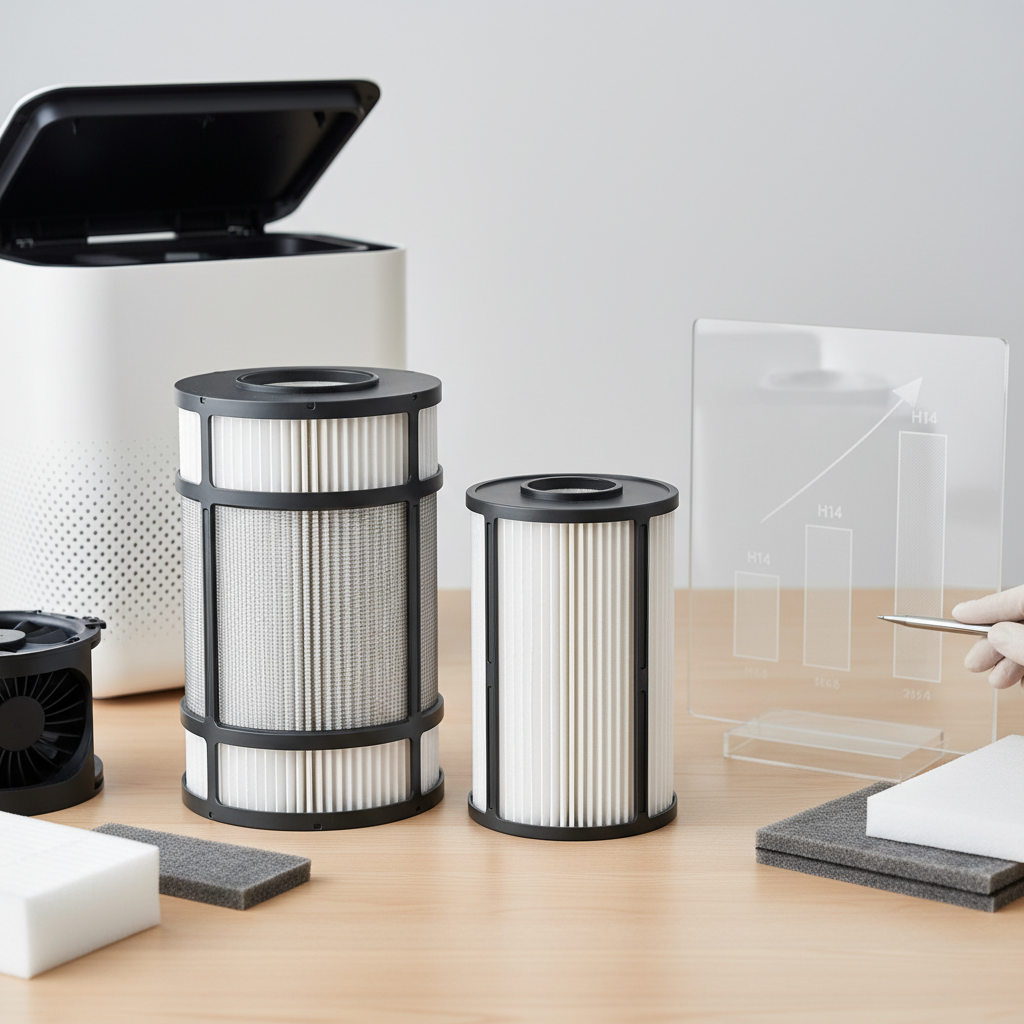
This article will meticulously break down the intricacies of HEPA filtration, focusing on the rigorous standards that define H13 and H14 filters. We will explore their specific capture efficiencies, the types of environments where each excels, and how these medical-grade filters contribute to safeguarding your health. Whether you are dealing with seasonal allergies, protecting vulnerable family members, or striving for pristine air in a sensitive setting, unraveling the capabilities of H13 and H14 HEPA filters is paramount to finding the perfect air purification solution for your needs.
Understanding Air Purifiers
An air purifier is a device designed to remove contaminants from the air in a room, improving indoor air quality. These systems typically consist of one or more filters and a fan that draws air through them, trapping airborne particles and circulating cleaner air back into the space. The fundamental principle revolves around capturing pollutants that can trigger allergies, exacerbate asthma, or generally compromise respiratory health.
The benefits of using an air purifier extend beyond simply removing dust. They can significantly reduce airborne allergens like pollen, pet dander, and mold spores, making indoor environments more comfortable for allergy and asthma sufferers. Furthermore, many advanced air purifiers can tackle microscopic threats such as bacteria and viruses, volatile organic compounds (VOCs) from household products, and even unpleasant odors, contributing to a fresher and healthier atmosphere overall.
Common Types of Air Purifiers
The effectiveness of an air purifier largely depends on the type and quality of its filtration technology. While various methods exist, HEPA filtration remains the gold standard for capturing particulate matter.
HEPA Air Purifiers (H13 & H14)
HEPA stands for High-Efficiency Particulate Air. A true HEPA filter is a mechanical air filter that forces air through a fine mesh that traps harmful particles such as pollen, pet dander, dust mites, and tobacco smoke. According to international standards like EN 1822 or ISO 29463, HEPA filters are categorized by their efficiency. The “Most Penetrating Particle Size” (MPPS), typically between 0.1 to 0.3 microns, is the most challenging particle size for filters to capture; filters generally perform even better on particles larger or smaller than the MPPS.
- H13 HEPA Filters: These are highly efficient, capturing at least 99.95% of airborne particles at the MPPS. Often referred to as “medical-grade,” H13 filters are widely used in a variety of settings, including homes, offices, and some medical facilities, providing excellent protection against common allergens, bacteria, and many viruses. They strike a balance between high filtration and reasonable airflow for most applications.
- H14 HEPA Filters: Taking efficiency a step further, H14 HEPA filters capture at least 99.995% of particles at the MPPS. This higher classification represents a tenfold improvement in particle retention on a logarithmic scale compared to H13. H14 filters are considered “higher filtration level medical-grade” and are indispensable in critical environments such as pharmaceutical cleanrooms, research laboratories, and surgical suites where the utmost air purity is essential to prevent contamination and disease transmission.
|
Our Picks for the Best Air purifier in 2026
As an Amazon Associate I earn from qualifying purchases.
|
||
| Num | Product | Action |
|---|---|---|
| 1 | LEVOIT Air Purifier for Home Allergies Pet Hair in Bedroom, Covers Up to 1073 ft² by 56W High Torque Motor, AHAM VERIFIDE, 3-in-1 Filter with HEPA Sleep Mode, Remove Dust Smoke Odor, Core300-P, White |

|
| 2 | LEVOIT Air Purifier for Home Bedroom Dorm Room, Smart & Voice Control, AHAM VERIFIED, 3-in-1 Filter With HEPA Sleep Mode, for Pollen, Pollutants, Smoke, Dander, Dust, Core 200S-P, White |
|
| 3 | Air Purifiers for Home with High Efficiency Filter Up to 1076 Ft² for Pet Hair, Odors, Pollen, Smoke, Compact Air Cleaner with 3 Speeds, Timer, Aroma Quiet 360°Intake Filter, White |
|
| 4 | Air Purifiers for Home Large Room Cover Up to 1500 Ft² with True HEPA Filter, 20dB Sleep Mode, 360° Air Intake & Outlet, Air Cleaner for Bedroom Pets, 7 Color Light, HAP604, Bright White |
|
| 5 | Air Purifiers for Home Large Room, Cover Up to 2400 Ft² with True HEPA Filter, Smart Mode, PM2.5 Air Quality Display, 22dB Sleep Mode, Aromatherapy with 2X-Purification & 360°Air Outlet, HAP603 |
|
| 6 | KNKA Air Purifier for Home Bedroom Large Room Up to 1,695 Ft² in 1 Hr, HEPA Air Cleaner with Washable Pre-Filter, AHAM VERIFIDE, AQI Display, ECO Mode, Pet Mode for Pets, Dust, Pollen, APH4000 |
|
| 7 | LEVOIT Air Purifier for Home Large Room Up to 1073Ft² with Air Quality Monitor, AHAM VERIFIDE, Smart WiFi, Washable Pre-Filter, HEPA Sleep Mode for Pets, Allergies, Dust, Pollen, Vital 100S-P, White |
|
| 8 | LEVOIT Air Purifiers for Bedroom Home Dorm, AHAM VERIFIED, 3-in-1 Filter Cleaner With Aroma Pad, Filters Smoke, Allergens, Pet Dander, Odor, Dust, Office, Desktop, Core Mini-P, White |
|
| 9 | LEVOIT Air Purifiers for Home Large Room Up to 1875 Ft² with Washable Pre-Filter, AHAM VERIFIDE, Air Quality Monitor, HEPA Sleep Mode for Allergies, Pet Hair in Bedroom, Vital 200S-P, White |
|
| 10 | FreAire Air Purifiers for Bedroom Up to 1086 Ft², Air Purifiers for Home with Lights, HEPA Air Purifier Removes Dust Smoke Pollen Dander Smell, for Home/Pets/Bedroom |
|
Activated Carbon Filters
Activated carbon filters are specially treated to be highly porous, giving them an extensive surface area for adsorption. This process is highly effective at trapping gases, odors, and Volatile Organic Compounds (VOCs) that HEPA filters cannot capture. They are often used in conjunction with HEPA filters to provide a comprehensive air purification solution, tackling chemical pollutants alongside particulate matter.
Ionizing Air Purifiers
Ionizers release a stream of charged ions into the air, which attach to airborne particles, giving them an electrical charge. These charged particles then clump together and become heavy enough to fall out of the air or adhere to surfaces, including walls and furniture, or an oppositely charged collector plate within the purifier. While effective at reducing airborne particles, some ionizers can produce ozone, a lung irritant, which is a consideration for health-sensitive individuals.
UV-C Light Purifiers
Ultraviolet-C (UV-C) light purifiers utilize short-wavelength UV light to neutralize airborne microorganisms like bacteria, viruses, and mold spores by damaging their DNA or RNA. These systems do not filter particles but instead aim to deactivate biological contaminants. UV-C technology is often integrated into air purifiers as an additional stage of purification, particularly useful in environments where biological threats are a concern.
Multi-Technology Air Purifiers
Many modern air purifiers combine several filtration technologies to offer a multi-layered approach to air purification. A common configuration includes a pre-filter to capture larger particles, followed by an H13 or H14 HEPA filter for fine particulates, and an activated carbon filter for gases and odors. Some models may also incorporate UV-C lights or ionizers for enhanced biological and particulate control, providing a comprehensive solution for a wide range of indoor air pollutants.
Comparison Chart: H13 vs. H14 HEPA Filter Efficiency
Understanding the nuances between H13 and H14 HEPA filters is crucial for selecting the right air purification system, especially for sensitive applications. While both are considered medical-grade and offer superior filtration, their efficiency ratings and typical use cases highlight their distinct advantages.
| Aspect | H13 HEPA Filter | H14 HEPA Filter |
|---|---|---|
| Filtration Efficiency | ≥ 99.95% at MPPS | ≥ 99.995% at MPPS |
| Particle Size Captured | Effectively captures particles down to 0.1-0.3 µm | Effectively captures particles down to 0.1-0.3 µm |
| Medical Grade Status | Medical-grade | Higher filtration level medical-grade |
| Relative Performance | Very high efficiency | Ten times more effective than H13 on a logarithmic scale at MPPS |
| Typical Applications | Homes, offices, schools, general medical facilities | Pharmaceutical cleanrooms, surgical suites, sensitive laboratories, biosafety facilities |
| Pressure Drop/Airflow | Generally lower pressure drop, better airflow | Slightly higher pressure drop, potentially reduced airflow if not designed well |
| Cost | Generally more affordable | Higher cost |
This chart illustrates that while an H13 filter provides exceptional air purification suitable for most residential and commercial settings, an H14 filter offers an even higher level of protection, critical for environments where even the slightest presence of contaminants could have severe consequences.
Key Criteria When Choosing an Air Purifier
Selecting an air purifier involves more than just picking a brand; it requires careful consideration of several factors to ensure it effectively meets your specific needs.
Room Size and CADR
The effectiveness of an air purifier is heavily dependent on its ability to clean the air in a given space. The Clean Air Delivery Rate (CADR) is a crucial metric, indicating how quickly the purifier removes pollutants like smoke, dust, and pollen from a room. Match the CADR rating of the air purifier to your room’s square footage to ensure adequate air changes per hour (ACH). A higher CADR means faster air purification for larger spaces.
Filtration Technology and Efficiency (Focus on H13/H14)
The core of any air purifier is its filtration system. For superior particle removal, an air purifier must incorporate a true HEPA filter. When selecting, consider the specific grade:
- H13 HEPA filters are an excellent choice for most homes, offices, and classrooms, effectively tackling common allergens, pet dander, dust, and many airborne pathogens.
- H14 HEPA filters are warranted for environments requiring the highest level of sterility and purity, such as medical settings, specialized laboratories, or homes with extremely vulnerable individuals. Assess your environment’s needs for particle removal—are you aiming for general allergen reduction or critical contamination control?
Beyond HEPA, consider additional filters like activated carbon for gases and odors, or UV-C light for bacterial and viral inactivation, based on the prevalent pollutants in your space.
Noise Level of the Machine
Air purifiers, especially those with powerful fans, can generate noise. Since many run continuously, the operating noise level is a significant factor, particularly for bedrooms or quiet workspaces. Look for models that specify low decibel (dB) ratings on their lowest fan settings. Some purifiers offer “sleep modes” or quiet settings that reduce fan speed and noise for undisturbed operation.
Additional Features
Modern air purifiers come with a host of smart features that enhance convenience and performance. These can include:
- Air quality sensors: Automatically adjust fan speed based on detected pollution levels.
- Timers: Allow you to schedule operation.
- Remote control or smart app connectivity: Enables control from your smartphone.
- Filter change indicators: Alert you when it’s time to replace filters, ensuring continuous efficiency.
- Child lock features: Prevent accidental changes to settings.
Brand and Reliability
Choosing an air purifier from a reputable brand often ensures higher quality, better performance, and reliable customer support. Look for brands with positive reviews and certifications that attest to their products’ filtration capabilities. A trustworthy manufacturer will be transparent about their filter specifications, including HEPA grades and testing standards.
Price and Warranty Policy
Air purifier prices vary widely based on features, filtration capacity, and brand. Consider not only the initial purchase price but also the long-term cost of filter replacements, which can be a significant ongoing expense. A good warranty policy provides peace of mind, covering potential defects and offering support for the expected lifespan of the device.
Buying Guide: How to Choose the Right Air Purifier
Making the right choice for an air purifier can significantly impact your indoor environment. Here’s a structured approach to finding your ideal system:
Determine Your Usage Needs
Start by identifying the primary purpose of your air purifier. Are you looking to alleviate allergy symptoms, reduce pet odors, protect against viruses, or simply improve general air quality? For households with young children, elderly individuals, or those suffering from allergies and asthma, a higher-grade HEPA filter like H13 or H14 becomes more critical. If VOCs and odors are a major concern, prioritize models with robust activated carbon filtration.
Match Air Purifier Type to Room Size
Measure the room where the purifier will be primarily used and consult the manufacturer’s CADR ratings to ensure the unit is appropriately sized for the space. Aim for an air purifier that can provide at least 4-5 air changes per hour (ACH) for optimal effectiveness, especially in areas with persistent pollutants or for individuals with sensitivities.
Understand Filtration Technologies
Educate yourself on the different filtration methods available. While True HEPA filtration is essential for particulate matter, remember its limitations with gases and odors, which are best handled by activated carbon. For critical applications, understand that an H13 HEPA filter is suitable for most medical-grade requirements, while an H14 offers the utmost purity for highly sensitive environments. Don’t be swayed by terms like “HEPA-like”; always confirm it’s a true HEPA or specify H13/H14.
Compare Features, Price, and Brand Reputation
Once you have a shortlist of suitable models, compare their features, performance, and overall value. Read user reviews and expert assessments to gauge real-world satisfaction and reliability. Consider the long-term costs, including filter replacement frequency and pricing, as these can add up over time. Opt for brands with a proven track record in air purification and robust warranty support.
Read User Reviews and Expert Opinions
Prior to purchasing, delve into customer feedback and professional reviews. These insights can highlight practical aspects such as noise levels, ease of filter replacement, and the actual effectiveness of the unit in various real-world scenarios, helping you avoid common pitfalls and ensuring your chosen model lives up to its promises.
Purchase from Reputable Retailers
Always buy your air purifier from authorized dealers or reputable online stores. This ensures you receive a genuine product with a valid warranty and access to customer service and authentic replacement filters. Avoid unverified sellers who might offer counterfeit products or filters that do not meet the stated efficiency standards.
Top Picks: Best Air Purifiers Today (By Price Segment)
Choosing the “best” air purifier depends heavily on individual needs, room size, and budget. While I cannot recommend specific brands or models, I can guide you on what to look for within different price segments, prioritizing HEPA filtration capabilities.
Entry-Level Segment (Under $300)
In this segment, look for models that feature true H13 HEPA filters as their primary filtration. These purifiers are generally suitable for smaller to medium-sized rooms (up to 250-300 sq ft). Prioritize units that also include an activated carbon layer for basic odor control. Check for a reasonable CADR for your intended room size and relatively low noise levels on the lowest fan setting. While advanced smart features might be minimal, a simple timer and filter change indicator are good signs of quality.
Mid-Range Segment ($300-$700)
This price bracket offers more robust features and larger coverage areas (up to 500-700 sq ft). Here, you should expect to find air purifiers equipped with H13 HEPA filters, often combined with thicker activated carbon filters for enhanced odor and VOC removal. Look for improved CADR ratings, quieter operation, and additional features like smart air quality sensors, auto mode, and possibly Wi-Fi connectivity for app control. Units in this segment often provide a better balance of performance, features, and durability for most family homes.
Premium Segment (Above $700)
In the premium category, you will find air purifiers designed for maximum performance, extensive coverage (700+ sq ft), and specialized applications. Expect to see models boasting H14 HEPA filters, offering the highest level of particulate filtration. These units typically feature multi-stage filtration systems, including substantial activated carbon layers, and sometimes UV-C sterilization or advanced ionization (with certified ozone-free operation). Look for superior CADR, extremely quiet operation even at higher settings, sophisticated air quality monitoring with detailed displays, robust build quality, and comprehensive smart home integration. These are ideal for large open-plan areas, homes with severe allergy sufferers, or environments demanding clinical-grade air purity.
Air Purifier Usage and Maintenance Guide
To ensure your air purifier operates at peak efficiency and provides the clean air you expect, proper usage and consistent maintenance are paramount.
How to Use Your Air Purifier Effectively
Position your air purifier correctly: For optimal performance, place the unit in an open area, away from walls or furniture that might obstruct airflow. It’s generally best to place it in the room where you spend the most time or where air quality is most critical, such as a bedroom or living room. Run it continuously: Air purifiers are most effective when run continuously. Modern units are designed for energy efficiency, so leaving them on will maintain consistent air quality. Use the appropriate fan speed: Higher fan speeds provide faster air cleaning but also generate more noise. Use higher settings when air quality is noticeably poor (e.g., after cooking, during peak allergy season) and lower, quieter settings for continuous background operation. Close windows and doors: To prevent outside pollutants from re-entering, keep windows and doors closed while the air purifier is running.
Regular Filter Cleaning and Replacement
The filters are the heart of your air purifier, and their effectiveness diminishes over time as they collect pollutants.
- Pre-filters: Many air purifiers have washable pre-filters that capture larger particles like dust and pet hair. Check and clean these monthly or as recommended by the manufacturer to prevent clogging and extend the life of subsequent filters.
- HEPA filters (H13/H14): HEPA filters are generally not washable and must be replaced. Their lifespan typically ranges from 6 to 12 months, depending on air quality and usage. Always refer to your specific model’s manual for replacement intervals. Failing to replace HEPA filters on time can reduce purification efficiency and even recirculate trapped pollutants if the filter becomes overloaded.
- Activated carbon filters: These filters become saturated over time and lose their ability to adsorb odors and gases. They usually require replacement every 3 to 6 months.
Always use genuine replacement filters from the manufacturer or a trusted third-party supplier to ensure compatibility and maintain the purifier’s certified performance.
Important Considerations for Air Purifier Use
- Room size: Ensure your air purifier’s CADR rating is appropriate for the room size to avoid overworking the unit or ineffective cleaning.
- Energy consumption: While many units are energy-efficient, consistently running a powerful purifier will contribute to electricity usage. Look for Energy Star certified models.
- Ozone emission: If your purifier uses ionization or UV technology, verify that it does not produce harmful levels of ozone. Certified ozone-free models are available and preferable.
- Placement: Avoid placing the air purifier directly next to humidifiers, as excessive moisture can degrade filter media.
By adhering to these usage and maintenance guidelines, you can maximize the lifespan and effectiveness of your air purifier, consistently providing a cleaner, healthier indoor environment.
Conclusion
Choosing the right air purifier is a significant step towards a healthier indoor environment, and understanding the differences between HEPA filter grades like H13 and H14 is fundamental to this decision. While both offer exceptional filtration capabilities, an H13 HEPA filter, capturing 99.95% of airborne particles at their most penetrating size, provides robust protection for most residential and general commercial settings. However, for critical environments demanding the absolute highest level of air purity, such as medical facilities or specialized laboratories, the H14 HEPA filter, with its 99.995% efficiency, stands as the superior choice, effectively removing even the most minute contaminants.
The decision ultimately hinges on your specific needs, the size of your space, and the types of pollutants you aim to combat. By considering factors like CADR, additional filtration technologies, noise levels, and long-term maintenance costs, you can confidently select an air purification system that aligns perfectly with your goals for cleaner, healthier air. What level of air purity do you envision for your space, and how will a precisely chosen air purifier help you achieve it?
Frequently Asked Questions
What does “MPPS” mean in HEPA filter efficiency?
MPPS stands for Most Penetrating Particle Size. This refers to the particle size that is most challenging for a filter to capture, typically ranging from 0.1 to 0.3 microns. HEPA filters are rated based on their efficiency at capturing particles at this specific size, and they generally perform even better at trapping particles that are either larger or smaller than the MPPS.
Can H13 HEPA filters remove viruses?
Yes, H13 HEPA filters are capable of capturing many viruses. While viruses themselves can be smaller than 0.1 microns, they often travel through the air attached to larger droplets or particles, which H13 filters, with their 99.95% efficiency at MPPS, can effectively trap, significantly reducing their concentration in the air.
Is an H14 HEPA filter necessary for home use?
For most residential settings, an H13 HEPA filter provides excellent air purification and is sufficient for tackling common allergens, dust, and many airborne pathogens. An H14 HEPA filter, with its higher 99.995% efficiency, is primarily necessary for environments requiring the highest level of sterility, such as medical cleanrooms or homes with severely immunocompromised individuals.
What is the difference between “True HEPA” and H13/H14 HEPA?
“True HEPA” generally refers to filters that meet the U.S. standard of capturing 99.97% of particles at 0.3 microns. H13 and H14 HEPA filters are specific classifications under European and international standards (EN 1822 / ISO 29463). An H13 filter captures 99.95% at MPPS, and an H14 captures 99.995% at MPPS. While both are highly effective, H13 and H14 represent a more precise grading system for very high-efficiency filters.
How often should H13 or H14 HEPA filters be replaced?
The replacement interval for H13 or H14 HEPA filters typically ranges from 6 to 12 months, depending on the air quality in your environment and the frequency of use. Environments with higher pollution levels or continuous operation will require more frequent replacements. Always consult your air purifier’s user manual for specific recommendations.
Do H13 or H14 HEPA filters remove odors and gases?
No, H13 and H14 HEPA filters are designed to capture particulate matter (dust, pollen, mold, bacteria, viruses). They are not effective at removing odors, gases, or Volatile Organic Compounds (VOCs). For these types of pollutants, an activated carbon filter is required, which is often included as a separate layer in multi-stage air purification systems.
Can a higher efficiency filter like H14 reduce airflow?
Yes, generally, filters with higher efficiency, like H14, are denser than lower-grade filters, which can lead to a slightly higher pressure drop across the filter. This increased resistance can potentially reduce the airflow of the air purifier, requiring a more powerful fan to maintain optimal Clean Air Delivery Rate (CADR). Manufacturers design purifiers to balance filtration efficiency with adequate airflow.