Breathing clean air is crucial for our health, yet invisible pollutants often compromise the air within our homes and offices. When choosing an air purifier, understanding the core technologies is key to making an informed decision. Two prominent methods stand out in the fight against indoor air pollution: Activated Carbon and PECO (Photo ElectroChemical Oxidation) technology. Both aim to improve air quality, but they operate on fundamentally different principles and excel at tackling distinct types of contaminants. This detailed comparison will help you navigate their strengths, weaknesses, and ideal applications, ensuring you find the best solution for your space and specific needs.
Overview of Air Purifiers
Air purifiers are devices designed to remove contaminants from the air in a room, improving indoor air quality. They function by drawing in air, processing it through various filtration or purification methods, and then releasing cleaner air back into the environment. The primary goal is to mitigate the health risks associated with indoor air pollution, which can range from allergens and dust to harmful gases and microscopic pathogens.
The basic principle behind most air purifiers involves capturing or neutralizing airborne particles and gases. This often starts with a fan that pulls air into the unit. From there, the air passes through a series of filters or purification chambers, each designed to target specific pollutants. The benefits of using an air purifier are extensive, including reducing allergy symptoms, alleviating asthma triggers, eliminating odors, and protecting against airborne viruses and bacteria, thus contributing to a healthier living or working space.
Common Types of Air Purifiers
The world of air purification offers a variety of technologies, each with unique strengths. Understanding these different types is essential for selecting an air purifier that effectively addresses your specific indoor air quality concerns. From trapping microscopic particles to destroying chemical pollutants, each technology plays a vital role.
HEPA Air Purifiers
HEPA (High-Efficiency Particulate Air) filters are the gold standard for capturing airborne particles. These mechanical filters are designed to trap 99.97% of particles 0.3 microns in size, including dust, pollen, pet dander, and smoke. Their intricate maze of fibers physically captures these contaminants as air passes through.
- Pros: Highly effective against particulate matter, widely recognized and tested, no byproducts.
- Cons: Does not remove gases, odors, or VOCs; filters need regular replacement; can become a breeding ground for microorganisms if not maintained.
- Applications: Ideal for allergy and asthma sufferers, homes with pets, and areas with significant dust or pollen.
|
Our Picks for the Best Air purifier in 2026
As an Amazon Associate I earn from qualifying purchases.
|
||
| Num | Product | Action |
|---|---|---|
| 1 | LEVOIT Air Purifier for Home Bedroom Dorm Room, Smart & Voice Control, AHAM VERIFIED, 3-in-1 Filter With HEPA Sleep Mode, for Pollen, Pollutants, Smoke, Dander, Dust, Core 200S-P, White |

|
| 2 | LEVOIT Air Purifier for Home Large Room Up to 1073Ft² with Air Quality Monitor, AHAM VERIFIDE, Smart WiFi, Washable Pre-Filter, HEPA Sleep Mode for Pets, Allergies, Dust, Pollen, Vital 100S-P, White |
|
| 3 | LEVOIT Air Purifiers for Bedroom Home Dorm, AHAM VERIFIED, 3-in-1 Filter Cleaner With Aroma Pad, Filters Smoke, Allergens, Pet Dander, Odor, Dust, Office, Desktop, Core Mini-P, White |
|
| 4 | KNKA Air Purifier for Home Bedroom Large Room Up to 1,695 Ft² in 1 Hr, HEPA Air Cleaner with Washable Pre-Filter, AHAM VERIFIDE, AQI Display, ECO Mode, Pet Mode for Pets, Dust, Pollen, APH4000 |
|
| 5 | LEVOIT Air Purifier for Home Allergies Pet Hair in Bedroom, Covers Up to 1073 ft² by 56W High Torque Motor, AHAM VERIFIDE, 3-in-1 Filter with HEPA Sleep Mode, Remove Dust Smoke Odor, Core300-P, White |
|
| 6 | FreAire Air Purifiers for Bedroom Up to 1086 Ft², Air Purifiers for Home with Lights, HEPA Air Purifier Removes Dust Smoke Pollen Dander Smell, for Home/Pets/Bedroom |
|
| 7 | Air Purifiers for Home Large Room Cover Up to 1500 Ft² with True HEPA Filter, 20dB Sleep Mode, 360° Air Intake & Outlet, Air Cleaner for Bedroom Pets, 7 Color Light, HAP604, Bright White |
|
| 8 | Air Purifiers for Home with High Efficiency Filter Up to 1076 Ft² for Pet Hair, Odors, Pollen, Smoke, Compact Air Cleaner with 3 Speeds, Timer, Aroma Quiet 360°Intake Filter, White |
|
| 9 | Air Purifiers for Home Large Room, Cover Up to 2400 Ft² with True HEPA Filter, Smart Mode, PM2.5 Air Quality Display, 22dB Sleep Mode, Aromatherapy with 2X-Purification & 360°Air Outlet, HAP603 |
|
| 10 | LEVOIT Air Purifiers for Home Large Room Up to 1875 Ft² with Washable Pre-Filter, AHAM VERIFIDE, Air Quality Monitor, HEPA Sleep Mode for Allergies, Pet Hair in Bedroom, Vital 200S-P, White |
|
Activated Carbon Air Purifiers
Activated carbon filters specialize in addressing gaseous pollutants and odors through a process called adsorption. The carbon is treated with oxygen, opening up millions of tiny pores that chemically bond with gas molecules. This makes it highly effective for trapping odors, chemical vapors, and volatile organic compounds (VOCs).
- Pros: Excellent for removing odors (e.g., cooking, smoke, pets), chemical fumes, and VOCs; often used in conjunction with HEPA filters.
- Cons: Does not remove particulate matter; can become saturated over time and potentially re-emit trapped pollutants if not replaced; less effective against very small or specific gaseous pollutants unless specialized.
- Applications: Kitchens, smoking areas, new homes with off-gassing furniture, and environments with chemical sensitivities.
Ionizing Air Purifiers
Ionizers release a stream of charged ions into the air. These ions attach to airborne particles, giving them an electrical charge. The charged particles then stick to nearby surfaces (like walls or furniture) or to each other, making them heavy enough to fall out of the air. Some ionizers also include a collection plate to attract these charged particles.
- Pros: Effective at removing very small particulate matter, no filters to replace in some models.
- Cons: Can produce ozone, a lung irritant, as a byproduct; particles may settle on surfaces rather than being removed from the room, requiring more frequent cleaning.
- Applications: Rooms needing fine particle removal, but with careful consideration of ozone output.
UV-C Air Purifiers
UV-C (ultraviolet-C) light purifiers use short-wavelength ultraviolet light to destroy airborne microorganisms. The UV-C light targets the DNA of bacteria, viruses, and mold spores, rendering them inactive and preventing them from reproducing. These are often used as a supplementary stage in multi-stage filtration systems.
- Pros: Effective at killing bacteria, viruses, and mold; no filter replacement needed for the UV-C lamp itself (though the lamp needs replacement periodically).
- Cons: Does not remove particles, gases, or odors; exposure time is critical for effectiveness; can produce ozone if not designed properly.
- Applications: Environments where germ and virus control is a priority, such as healthcare settings or homes with immunocompromised individuals.
Multi-Technology Air Purifiers
Many modern air purifiers combine several technologies to offer comprehensive air cleaning. A common combination includes a pre-filter for larger particles, a HEPA filter for fine particles, and an activated carbon filter for gases and odors. Some advanced systems might also integrate UV-C light or specialized destruction technologies.
- Pros: Addresses a wider range of pollutants; offers a more robust solution for overall air quality improvement.
- Cons: Can be more expensive; multiple filters may need replacement, increasing maintenance costs.
- Applications: Homes seeking a holistic approach to air purification, tackling both particles and gaseous contaminants.
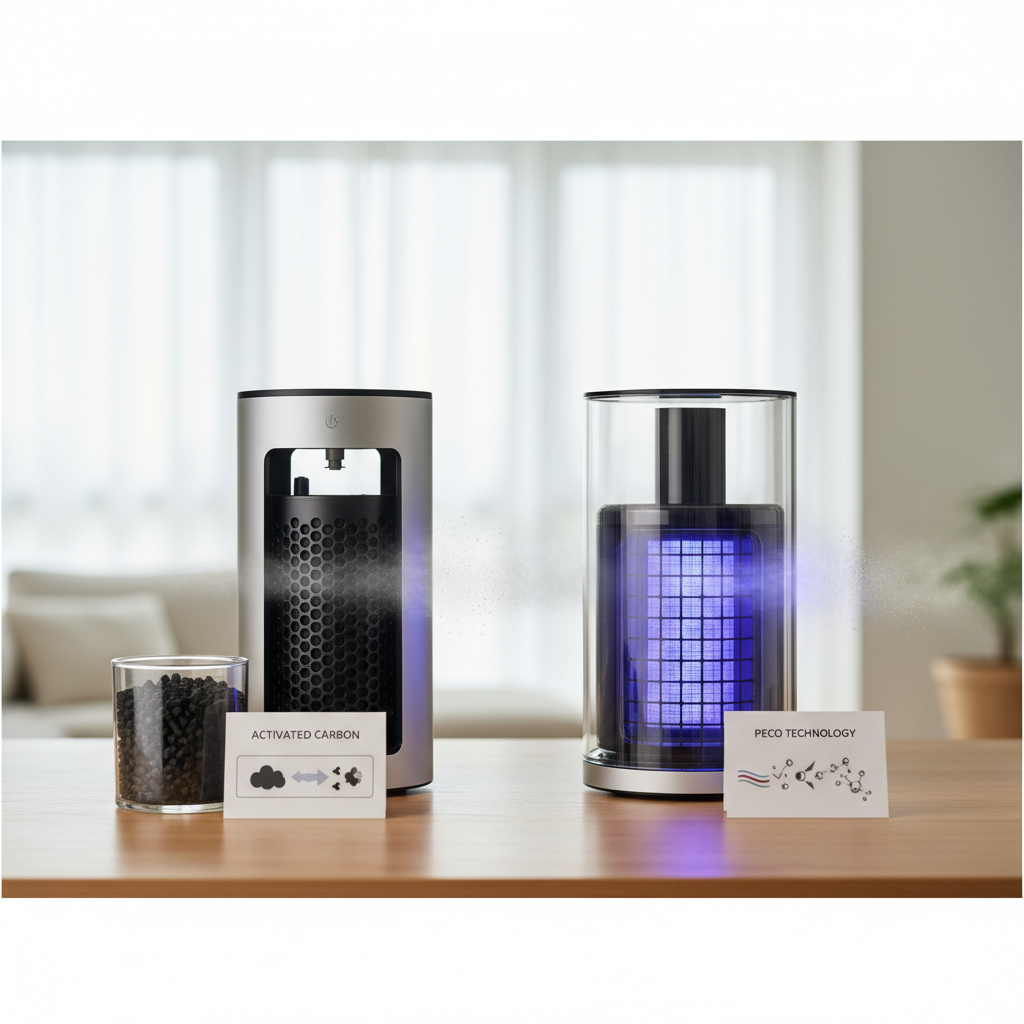
Comparison: Activated Carbon vs. PECO Technology
When evaluating air purification technologies, the choice between Activated Carbon and PECO (Photo ElectroChemical Oxidation) technology often comes down to understanding their fundamental mechanisms and what types of pollutants they target most effectively. While Activated Carbon focuses on trapping gases, PECO technology goes a step further by actively destroying a broad spectrum of contaminants.
| Feature | Activated Carbon | PECO Technology (e.g., Molekule) |
|---|---|---|
| Mechanism | Adsorption (traps pollutants on surface) | Photo Electrochemical Oxidation (destroys pollutants) |
| Pollutants Targeted | Gases, odors, VOCs, chemical vapors | VOCs, bacteria, viruses, mold, allergens, chemicals |
| Fate of Pollutants | Trapped; can be re-released if saturated | Broken down into harmless elements (CO2, water vapor) |
| Particle Removal | None directly (often combined with HEPA) | None directly (often combined with HEPA/other filters) |
| Effectiveness against Microorganisms | None | Highly effective at destroying bacteria, viruses, mold |
| Byproducts | None (unless saturation leads to re-emission) | Harmless gases (CO2, water vapor); designed to avoid ozone |
| Maintenance | Regular filter replacement (saturation-dependent) | Filter replacement (for catalyst-coated filter) |
| Primary Use | Odor control, chemical gas removal | Comprehensive destruction of organic pollutants and microorganisms |
Deep Dive: Activated Carbon
Activated carbon air purifiers rely on a unique property called adsorption. This is not to be confused with absorption, where a substance is taken into another. Instead, adsorption means molecules adhere to the surface of the carbon. The carbon is “activated” by processing it with oxygen, which creates millions of microscopic pores and vastly increases its surface area. This porous structure acts like a sponge for gaseous pollutants.
How Activated Carbon Works
When air passes through an activated carbon filter, gas molecules, odors, and VOCs (Volatile Organic Compounds) are attracted to and trapped within these pores. The chemical structure of activated carbon makes it particularly effective at binding with organic compounds, which include many common indoor air pollutants like cooking smells, pet odors, smoke, and fumes from cleaning products or new furniture.
Advantages of Activated Carbon
The primary benefit of activated carbon is its exceptional ability to remove a wide range of gaseous pollutants and unpleasant odors. It’s often the go-to solution for specific problems like strong cooking smells or lingering chemical fumes. Many high-quality air purifiers combine activated carbon with a HEPA filter, creating a comprehensive system that tackles both particulate matter and airborne chemicals. This dual approach offers robust protection against a broader spectrum of indoor air contaminants.
Limitations of Activated Carbon
Despite its strengths, activated carbon has some drawbacks. It does not effectively remove particulate matter like dust, pollen, or pet dander; that’s where HEPA filters come in. A significant limitation is its capacity. Activated carbon filters can become saturated over time, meaning all their pores are filled with pollutants. Once saturated, the filter loses its effectiveness and, in some cases, can even begin to re-emit previously adsorbed gases back into the air. This “off-gassing” can negate the benefits of purification if filters are not replaced regularly.
Deep Dive: PECO Technology
PECO (Photo ElectroChemical Oxidation) technology represents a newer, more advanced approach to air purification, primarily developed and patented by Molekule. Unlike traditional filtration methods that merely trap pollutants, PECO technology is designed to destroy them at a molecular level.
How PECO Technology Works
PECO technology utilizes a light-activated, nanoparticle-coated filter. When light (specifically UV-A light) shines on this proprietary catalyst, it initiates a chemical reaction that creates hydroxyl free radicals. These highly reactive radicals then oxidize and break down organic pollutants, including VOCs, bacteria, viruses, mold spores, and allergens, into harmless trace amounts of water and carbon dioxide. This destructive process means that pollutants are eliminated from the air rather than just captured.
Advantages of PECO Technology
One of the most significant advantages of PECO technology is its ability to destroy a wide range of tiny organic pollutants that might pass through or survive on other types of filters. For example, some VOCs are too small for HEPA filters, and bacteria or mold can remain viable on HEPA filter surfaces. PECO, however, actively breaks down these harmful substances, preventing their re-release and effectively sterilizing the air. Furthermore, PECO is designed to be highly efficient, working significantly faster than older photocatalytic oxidation (PCO) technologies and, critically, without producing ozone, which can be a harmful byproduct of some PCO systems.
Limitations of PECO Technology
While powerful, PECO technology is primarily focused on the destruction of organic and biological pollutants. It typically does not function as a standalone solution for larger particulate matter like dust and pollen. For comprehensive air purification, PECO is often integrated into multi-stage filtration systems that also include pre-filters and HEPA filters to handle these larger particles. Being a proprietary technology, its availability is generally limited to specific brands, and the replacement filters can be more specialized and potentially more expensive than standard HEPA or activated carbon filters.
Buying Guide: Choosing the Right Air Purifier
Selecting the ideal air purifier involves more than just picking a brand; it requires a thoughtful assessment of your specific needs, the size of your space, and the types of pollutants you wish to combat. Taking the time to consider these factors will ensure your investment genuinely improves your indoor air quality.
Room Size and CADR (Clean Air Delivery Rate)
The effectiveness of an air purifier is heavily dependent on its capacity to clean the air in your specific room size. Always match the purifier’s CADR (Clean Air Delivery Rate) to the square footage of the room. A higher CADR indicates faster cleaning for a larger area. For optimal performance, look for a CADR that allows the air in your room to be changed at least 4-5 times per hour. Using a purifier too small for the room will result in inefficient cleaning.
Types of Filters and Pollutant Removal
Consider the specific pollutants you need to address.
- Particles (dust, pollen, pet dander, smoke): Prioritize models with a True HEPA filter.
- Gases, Odors, VOCs: Look for a substantial activated carbon filter.
- Viruses, Bacteria, Mold, Tiny VOCs: PECO technology or UV-C light can be highly effective for microbial destruction.
Many top-rated purifiers combine multiple technologies for comprehensive coverage.
Noise Level
Air purifiers operate with fans, and noise levels can vary significantly. Check the decibel (dB) rating, especially if the unit will be in a bedroom or office. Quieter models typically operate around 30-50 dB on lower settings, while higher settings can be louder. Some purifiers offer a “sleep mode” for ultra-quiet operation at night.
Additional Features
Modern air purifiers come with a host of convenient features:
- Smart Sensors: Automatically adjust fan speed based on detected air quality.
- Timers: Set the purifier to run for specific durations.
- Remote Control/Smart App Connectivity: Control the unit from anywhere.
- Filter Change Indicators: Alert you when filters need replacement.
- Portability: Wheels or handles can be useful for moving the unit between rooms.
Brand Reputation and Warranty
Invest in reputable brands known for quality and customer support. Read reviews from other users to gauge satisfaction and reliability. A good warranty provides peace of mind and protects your investment against defects. Researching manufacturer policies on parts and labor is also a good practice.
Cost and Maintenance
Consider both the upfront purchase price and the ongoing maintenance costs, primarily filter replacements. Some advanced technologies might have higher initial costs and more specialized, expensive filters. Factor in the long-term cost of ownership, including filter longevity and availability, before making your final decision.
Top Picks: Best Air Purifiers (By Price Segment)
Choosing an air purifier can be overwhelming with so many options available. Here’s a general guide to help you identify excellent choices across different price points, keeping in mind that specific models and pricing can fluctuate.
Budget-Friendly Segment (Under $150)
In this segment, you’ll typically find compact purifiers best suited for smaller rooms, often focusing on basic HEPA and activated carbon filtration.
- Key Features: Basic HEPA and carbon filters, manual fan speeds, suitable for bedrooms or small offices.
- Considerations: May have lower CADR ratings, fewer advanced features, and potentially less robust construction.
- Ideal for: Individuals needing basic particle and odor removal in a confined space without breaking the bank.
Mid-Range Segment ($150-$350)
This segment offers a significant leap in features, performance, and coverage area. You’ll find more advanced filtration combinations and smart capabilities.
- Key Features: True HEPA filters, substantial activated carbon for VOCs, smart sensors, auto mode, quieter operation, better build quality. Some might include UV-C or basic ionization.
- Considerations: Good balance of price and performance for most homes.
- Ideal for: Small to medium-sized living rooms, larger bedrooms, or apartments where a comprehensive solution is desired without luxury pricing.
Premium Segment (Over $350)
High-end air purifiers offer superior performance, cutting-edge technologies like PECO, broader coverage, and a full suite of smart features.
- Key Features: Advanced multi-stage filtration (including PECO or medical-grade HEPA), powerful CADR for large open spaces, ultra-quiet operation, robust smart home integration, premium design and materials.
- Considerations: Higher initial investment, but often with lower long-term filter costs or extended filter life.
- Ideal for: Large open-plan homes, individuals with severe allergies or respiratory conditions, or those seeking the most advanced protection against a wide array of pollutants, including biological threats.
Using and Maintaining Your Air Purifier
To ensure your air purifier operates effectively and provides the clean air you expect, proper usage and regular maintenance are crucial. Neglecting these aspects can diminish performance and even shorten the lifespan of your device.
Effective Usage Tips
- Placement Matters: Position your air purifier in the room where you spend the most time or where pollution sources are highest. Avoid placing it in corners or directly against walls, which can obstruct airflow.
- Keep Windows Closed: For optimal performance, keep windows and doors closed in the room where the purifier is operating. This prevents new pollutants from entering and overloading the system.
- Run It Consistently: Air quality fluctuates, so it’s often best to run your purifier continuously, especially if you have allergies or respiratory sensitivities. Many modern purifiers have energy-efficient settings for this purpose.
- Use Auto Mode: If your purifier has an auto mode with air quality sensors, utilize it. The device will automatically adjust fan speed based on detected pollution levels, optimizing performance and energy use.
Filter Cleaning and Replacement
The filters are the heart of your air purifier, and their maintenance is paramount.
- Pre-filters: These often capture larger particles like dust and pet hair and are typically washable. Check your manual for cleaning instructions, usually every 2-4 weeks.
- HEPA Filters: True HEPA filters are not washable and must be replaced. Their lifespan varies, but generally, they last 6-12 months, depending on air quality and usage. A filter indicator light on your unit will usually signal when it’s time for a change.
- Activated Carbon Filters: Like HEPA filters, activated carbon filters are usually not washable and require replacement. Their lifespan can be shorter than HEPA filters, often 3-6 months, especially in environments with heavy odors or VOCs. Saturation reduces their effectiveness.
- PECO Filters: These proprietary filters also require periodic replacement, as their catalyst can degrade over time. Follow the manufacturer’s recommendations for replacement intervals, usually every 6 months to a year.
General Maintenance Tips
- Clean Exterior: Regularly wipe down the exterior of your air purifier with a soft, dry cloth to prevent dust buildup on air intake and exhaust vents.
- Check for Obstructions: Ensure that the air intake and output vents are not blocked by furniture, curtains, or other objects, as this can impede airflow and reduce efficiency.
- Store Properly: If you’re storing your air purifier for an extended period, clean all filters, remove them if possible, and store the unit in a dry, cool place to prevent mold or dust accumulation.
By diligently following these usage and maintenance guidelines, you can significantly extend the life of your air purifier and ensure it continues to provide you with the clean, fresh air you deserve.
Conclusion
Choosing between Activated Carbon and PECO technology in an air purifier boils down to understanding their distinct approaches to indoor air quality. Activated Carbon excels at adsorbing gases, odors, and VOCs, making it invaluable for chemical and smell-related concerns. PECO technology, on the other hand, actively destroys a wider array of organic pollutants, including microscopic viruses, bacteria, and allergens, offering a more destructive and comprehensive solution against biological contaminants and very small VOCs.
While Activated Carbon acts like a highly porous sponge, trapping pollutants, PECO technology functions as a microscopic incinerator, breaking them down into harmless components. Often, the most effective air purification systems combine these technologies with HEPA filtration to tackle both particulate matter and gaseous/biological threats comprehensively. Ultimately, the best choice depends on your specific needs: are you battling persistent odors and chemical fumes, or are you seeking advanced protection against microorganisms and tiny organic compounds? Understanding these differences empowers you to select an air purifier that genuinely transforms your indoor environment.
What specific indoor air quality challenges are you hoping to solve in your home?
Frequently Asked Questions
What are VOCs, and how do Activated Carbon and PECO technology address them?
VOCs, or Volatile Organic Compounds, are harmful chemicals released as gases from various products like paints, cleaning supplies, and new furniture. Activated Carbon filters trap VOCs through adsorption, pulling them onto the filter’s surface. PECO technology, however, destroys VOCs by breaking them down into harmless byproducts like water and carbon dioxide, effectively eliminating them from the air.
Can Activated Carbon filters re-release pollutants?
Yes, Activated Carbon filters can become saturated over time. Once their pores are full, they lose the ability to adsorb new pollutants and, in some cases, may even re-emit previously trapped gases back into the air. Regular filter replacement is crucial to prevent this and maintain effectiveness.
Is PECO technology safe, and does it produce ozone?
PECO technology, as developed by Molekule, is designed to be safe and specifically engineered to destroy pollutants without producing harmful ozone. This is a key differentiator from some older photocatalytic oxidation (PCO) technologies that could sometimes generate ozone as a byproduct.
Which technology is better for pet owners?
For pet owners, both technologies offer benefits. Activated Carbon is excellent for removing pet odors. PECO technology, especially when combined with a HEPA filter, can destroy pet dander allergens and airborne bacteria or viruses spread by pets. A multi-stage purifier incorporating HEPA, Activated Carbon, and PECO would offer the most comprehensive solution.
How often should I replace filters for these technologies?
Filter replacement frequency depends on usage, air quality, and the manufacturer’s recommendations. Typically, Activated Carbon filters may need replacement every 3-6 months, while PECO filters are often replaced every 6-12 months. Always refer to your specific air purifier’s manual for precise guidelines.