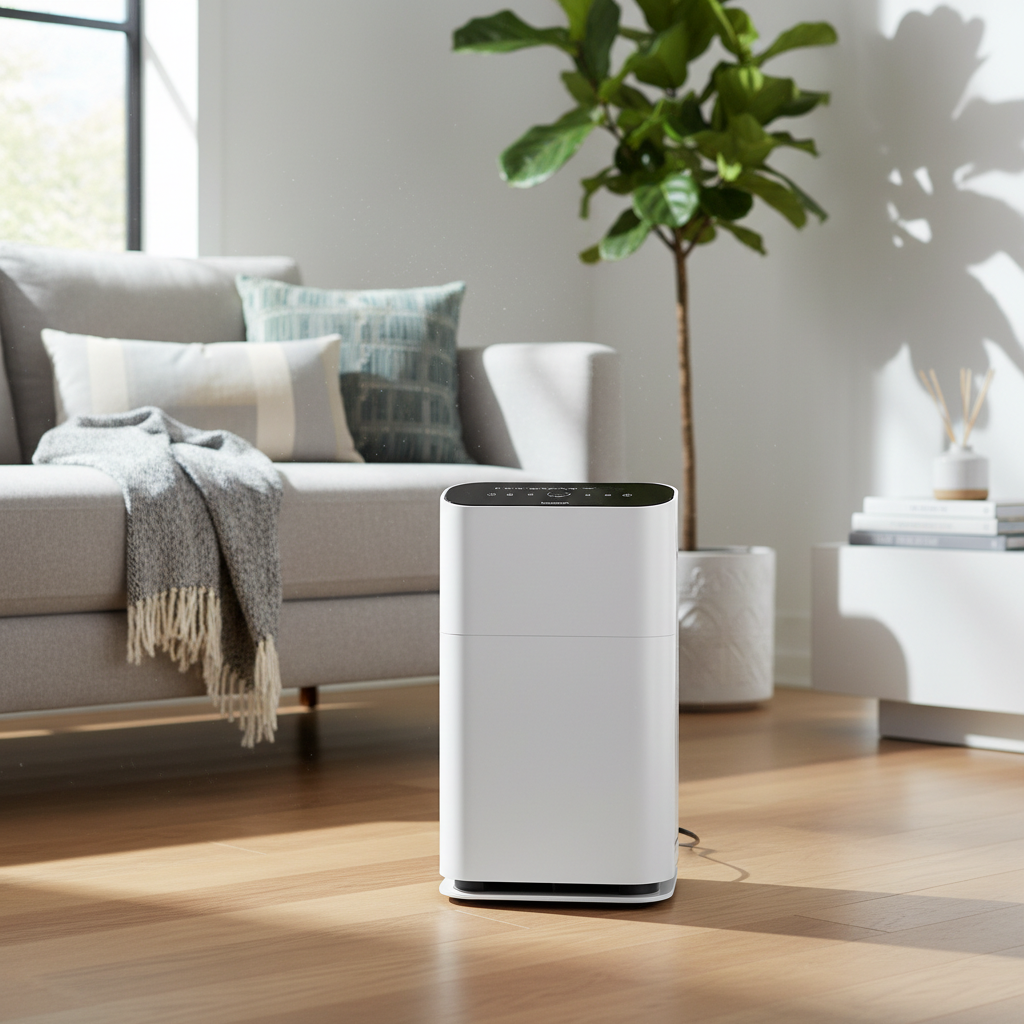
Step into many nail salons, and the distinct aroma of polishes, removers, and acrylics is immediately noticeable. While these scents are synonymous with beauty treatments, they are often indicators of volatile organic compounds (VOCs) and fine particulate matter lingering in the air. For both clients seeking a relaxing experience and the dedicated technicians who spend countless hours in this environment, managing these airborne contaminants is not just about comfort—it’s about health and safety. Choosing the right air purifier is a critical step in transforming your nail salon into a breath of fresh air.
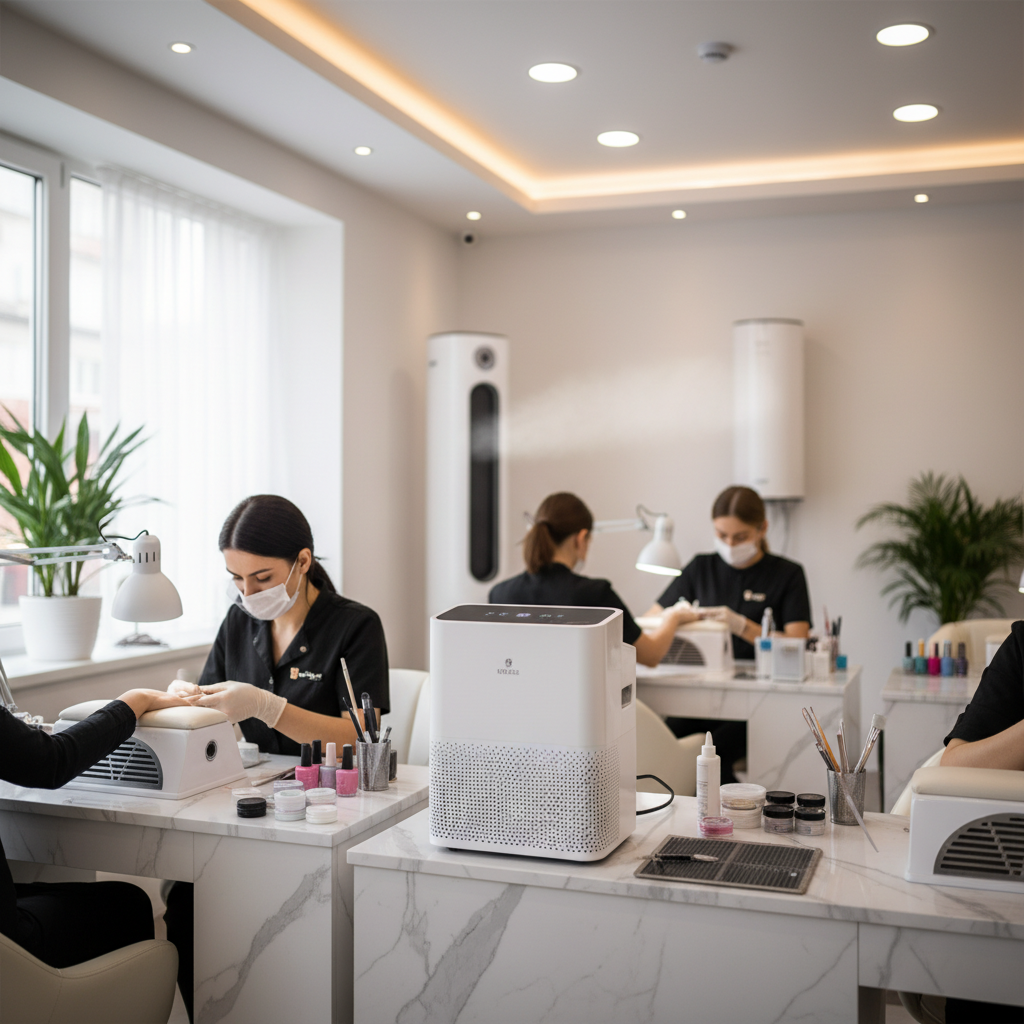
Understanding Nail Salon Air Quality Challenges
Nail salons, by their very nature, introduce a unique cocktail of pollutants into the indoor environment. The beauty services offered, from manicures and pedicures to gel and acrylic applications, release various substances that can compromise air quality.
The primary culprits can be broadly categorized into two main areas: chemical fumes and particulate matter. Chemical fumes include a range of volatile organic compounds (VOCs) such as acetone, formaldehyde, toluene, methyl methacrylate (MMA), and dibutyl phthalate (DBP). These chemicals, found in nail polishes, removers, glues, and artificial nail products, can lead to immediate discomforts like headaches, dizziness, and respiratory irritation. Long-term exposure for salon workers has been linked to more serious health issues, including asthma, skin disorders, liver disease, and even reproductive and neurological problems.
Beyond the visible dust, a more insidious threat lurks in the form of chemical volatile organic compounds (VOCs). Nail polishes, removers, acrylics, and adhesives contain a range of chemicals such as formaldehyde, toluene, and acetone. The meticulous filing and shaping of nails also generate a fine dust composed of nail fragments, keratin, and microscopic skin particles. These tiny airborne particles can easily be inhaled, posing an immediate concern for both clients and staff.
Poor ventilation further exacerbates these problems, allowing carbon dioxide levels to build up, which can lead to drowsiness and reduced performance. Therefore, effective air purification works in conjunction with proper ventilation to create a truly healthy salon environment.
Essential Air Purification Technologies for Nail Salons
To effectively combat the diverse pollutants found in nail salons, a multi-stage approach to air purification is essential. No single filter type can handle all contaminants; rather, a combination of specialized technologies offers the most comprehensive protection.
Activated Carbon Filtration: The VOC & Odor Champion
|
Our Picks for the Best Air purifier in 2026
As an Amazon Associate I earn from qualifying purchases.
|
||
| Num | Product | Action |
|---|---|---|
| 1 | KNKA Air Purifier for Home Bedroom Large Room Up to 1,695 Ft² in 1 Hr, HEPA Air Cleaner with Washable Pre-Filter, AHAM VERIFIDE, AQI Display, ECO Mode, Pet Mode for Pets, Dust, Pollen, APH4000 |

|
| 2 | LEVOIT Air Purifiers for Home Large Room Up to 1875 Ft² with Washable Pre-Filter, AHAM VERIFIDE, Air Quality Monitor, HEPA Sleep Mode for Allergies, Pet Hair in Bedroom, Vital 200S-P, White |
|
| 3 | Air Purifiers for Home Large Room, Cover Up to 2400 Ft² with True HEPA Filter, Smart Mode, PM2.5 Air Quality Display, 22dB Sleep Mode, Aromatherapy with 2X-Purification & 360°Air Outlet, HAP603 |
|
| 4 | Air Purifiers for Home with High Efficiency Filter Up to 1076 Ft² for Pet Hair, Odors, Pollen, Smoke, Compact Air Cleaner with 3 Speeds, Timer, Aroma Quiet 360°Intake Filter, White |
|
| 5 | LEVOIT Air Purifier for Home Allergies Pet Hair in Bedroom, Covers Up to 1073 ft² by 56W High Torque Motor, AHAM VERIFIDE, 3-in-1 Filter with HEPA Sleep Mode, Remove Dust Smoke Odor, Core300-P, White |
|
| 6 | LEVOIT Air Purifiers for Bedroom Home Dorm, AHAM VERIFIED, 3-in-1 Filter Cleaner With Aroma Pad, Filters Smoke, Allergens, Pet Dander, Odor, Dust, Office, Desktop, Core Mini-P, White |
|
| 7 | FreAire Air Purifiers for Bedroom Up to 1086 Ft², Air Purifiers for Home with Lights, HEPA Air Purifier Removes Dust Smoke Pollen Dander Smell, for Home/Pets/Bedroom |
|
| 8 | Air Purifiers for Home Large Room Cover Up to 1500 Ft² with True HEPA Filter, 20dB Sleep Mode, 360° Air Intake & Outlet, Air Cleaner for Bedroom Pets, 7 Color Light, HAP604, Bright White |
|
| 9 | LEVOIT Air Purifier for Home Large Room Up to 1073Ft² with Air Quality Monitor, AHAM VERIFIDE, Smart WiFi, Washable Pre-Filter, HEPA Sleep Mode for Pets, Allergies, Dust, Pollen, Vital 100S-P, White |
|
| 10 | LEVOIT Air Purifier for Home Bedroom Dorm Room, Smart & Voice Control, AHAM VERIFIED, 3-in-1 Filter With HEPA Sleep Mode, for Pollen, Pollutants, Smoke, Dander, Dust, Core 200S-P, White |
|
Activated carbon filters are indispensable for any nail salon. These filters are specifically designed to trap gaseous pollutants, chemical fumes (VOCs), and unpleasant odors through a process called adsorption. The carbon’s highly porous structure creates a vast surface area that acts like a sponge, attracting and holding chemical molecules.
For nail salons, activated carbon is crucial for neutralizing the pervasive smells and hazardous VOCs from products like acetone, formaldehyde, and toluene. When selecting a purifier, prioritize units with a substantial amount of activated carbon, typically measured by weight (e.g., several pounds) or thickness (e.g., 2 inches or more). Some advanced systems even use specialized carbon blends engineered to target specific chemical compounds, offering enhanced removal capabilities.
HEPA Filtration: Trapping Dust and Fine Particles
High-Efficiency Particulate Air (HEPA) filters are the gold standard for capturing airborne particulate matter. These mechanical filters are woven from a dense mat of fibers designed to capture 99.97% of particles as small as 0.3 microns. This includes common salon irritants like nail dust, skin particles, pollen, pet dander, and even airborne bacteria and viruses.
For nail salons, where filing generates significant amounts of fine dust, a true HEPA filter is non-negotiable. It ensures that these microscopic irritants are effectively removed from the air, protecting both clients and technicians from immediate discomforts like coughing and sneezing, and mitigating long-term respiratory risks associated with inhaling particulate matter.
Pre-filters: Extending Filter Lifespan
Often the first line of defense in a multi-stage purification system, pre-filters play a crucial role in capturing larger particles such as hair, lint, and coarse dust. By trapping these bigger contaminants, pre-filters protect the more delicate and expensive HEPA and activated carbon filters from prematurely clogging, significantly extending their operational lifespan and reducing maintenance costs.
Combination Systems: The Ultimate Defense
The most effective air purifiers for nail salons integrate multiple filtration technologies. A robust system typically includes a pre-filter, followed by a heavy-duty activated carbon filter for chemical fumes and odors, and then a true HEPA filter for particulate matter. This layered approach ensures that a wide spectrum of pollutants, from large dust particles to microscopic VOCs, is thoroughly addressed, providing the cleanest possible air.
Technologies to Approach with Caution (or Avoid)
While many air purification technologies exist, not all are suitable or safe for a nail salon environment, especially when dealing with chemical fumes. It’s crucial to understand which technologies can be counterproductive or even harmful.
Ionic Purifiers: The Ozone Concern
Ionic air purifiers work by releasing a stream of negatively charged ions into the air, which attach to airborne particles, causing them to fall out of the air or stick to surfaces. While they can be effective at reducing some airborne particles, a significant drawback is their potential to produce ozone as a byproduct. Ozone, a powerful lung irritant, can be harmful when inhaled, especially in enclosed spaces or at high concentrations. For an environment like a nail salon, where occupants are already exposed to various chemicals, adding ozone to the air can worsen respiratory conditions and negate the benefits of air purification. For this reason, it is generally recommended to opt for ozone-free purification methods.
UV-C Lights: Sterilization, Not Fume Removal
Ultraviolet germicidal irradiation (UV-C) technology uses UV light to destroy bacteria, viruses, and mold spores by disrupting their DNA. While beneficial for sterilizing the air and reducing the spread of airborne pathogens, UV-C lights are largely ineffective against chemical fumes, VOCs, and particulate matter. They serve a different purpose than chemical fume control. If your primary concern is chemical fumes, UV-C should not be the sole or primary purification method; it can be a supplementary feature in a multi-stage system, but its direct impact on chemical odors is minimal.
Ozone Generators: A Harmful Illusion
Ozone generators should be explicitly avoided in nail salons. These devices are marketed to “neutralize” odors by producing ozone. However, ozone does not truly eliminate chemical fumes; instead, it masks them by temporarily altering their smell or reacts with them to create new, potentially more harmful byproducts. More importantly, deliberate ozone generation for air purification can create concentrations that are dangerous to human health, irritating the lungs and respiratory system, and worsening conditions like asthma. Health experts and regulatory bodies widely advise against the use of ozone generators in occupied spaces. Do not ventilate to control odors; ventilate to control vapors and dust.
Key Criteria for Choosing a Nail Salon Air Purifier
Selecting the ideal air purifier for your nail salon involves more than just picking a popular brand. Several critical factors must be considered to ensure maximum effectiveness and a healthy environment.
Room Size and CADR (Clean Air Delivery Rate)
The effectiveness of an air purifier is heavily dependent on its capacity to clean the air in a given space. The Clean Air Delivery Rate (CADR) measures how quickly an air purifier removes pollutants from a room. Look for a CADR rating appropriate for your salon’s square footage and ceiling height. A common guideline is to aim for at least 3-5 air changes per hour (ACH) in a commercial setting. To estimate the minimum CADR needed, you can use the calculation: Room volume (in cubic meters) x 3 = CADR needed. Residential purifiers often fall short in handling the higher volume of air and pollutant load in a busy salon.
Filter Lifespan and Replacement Costs
Filters are the heart of an air purifier, and their effectiveness diminishes over time. Activated carbon filters become saturated, and HEPA filters accumulate particles. Assess the expected lifespan of replacement filters (typically 6-12 months for HEPA, 3-6 months for carbon, depending on usage and air quality) and their associated costs. Investing in a system with long-lasting, high-capacity filters can save money and hassle in the long run. Some commercial-grade purifiers offer filters designed for extended use in demanding environments.
Noise Level: Maintaining a Serene Environment
A quiet ambiance is often part of the salon experience. Chemical fumes aside, a noisy air purifier can detract from client relaxation. Check the decibel (dB) ratings, especially on higher fan settings. Many commercial units are engineered for efficient operation with minimal sound output, ensuring a comfortable environment for conversations and quiet treatments.
Placement and Type: Source Capture vs. Ambient Air
Air purification strategies in a nail salon can broadly be divided into source capture and ambient air purification.
- Source Capture Systems: These systems are designed to capture contaminants directly at the point where they are generated, such as at manicure tables or pedicure stations. They often involve flexible hoses or vents placed within 12 inches of the chemical application area, drawing fumes and dust away before they can spread. Many building codes, including the International Mechanical Code (IMC), mandate source capture ventilation with a specific exhaust rate (e.g., 50 CFM per station) directed outdoors. These are highly effective for direct personal protection.
- Ambient Air Purifiers: These are freestanding or wall-mounted units that clean the general room air. While essential for overall air quality, they are best used in conjunction with source capture systems, not as a replacement. Wall-mounted or ceiling-mounted units are often preferred in salons as they save valuable floor space and can efficiently handle larger air volumes. Avoid standard home-use purifiers, as they are typically not robust enough for the continuous, heavy-duty demands of a commercial salon.
Additional Features and Smart Technology
Modern air purifiers come with a host of features that can enhance convenience and effectiveness. Look for options such as:
- VOC Sensors: These detect the presence of volatile organic compounds and can automatically adjust fan speed to respond to changing air quality.
- Auto Mode: Allows the purifier to run efficiently by sensing air quality and adjusting settings without manual intervention.
- Timers and Sleep Modes: Useful for managing operation during off-peak hours or when the salon is closed.
- Remote Control or Smart Connectivity: Offers easy control and monitoring from a distance.
Durability and Commercial-Grade Construction
Nail salons are demanding environments. Choose air purifiers built with durable materials, such as galvanized steel, designed for continuous, heavy-duty operation. Commercial-grade units are typically more robust and reliable than their residential counterparts, offering a longer lifespan and better performance under salon conditions.
Brand Reputation and Warranty
Invest in purifiers from reputable manufacturers known for their quality, performance, and customer support. A good warranty provides peace of mind and indicates the manufacturer’s confidence in their product’s durability and effectiveness.
Buying Guide: Finding the Right Purifier for Your Salon
Navigating the market for nail salon air purifiers can be daunting, but a structured approach can help you make an informed decision that best suits your establishment’s unique needs.
First, assess your salon’s specific requirements. Consider the size of your space, the number of workstations, and the types of services you offer. A salon primarily offering gel manicures might have different needs than one specializing in acrylics, given the varying chemical exposures. Also, evaluate your existing ventilation system. Is it adequate? Does it meet local codes? An air purifier augments, but does not replace, proper exhaust ventilation.
Next, prioritize combined HEPA and Activated Carbon filtration. This combination is the cornerstone of effective chemical fume and particulate matter removal in a nail salon. Ensure the activated carbon filter is substantial enough to handle significant VOC loads.
Where possible, invest in source capture systems. These are highly effective for removing pollutants directly at the source, offering immediate protection to technicians and clients at the workstation. They are also often a requirement for compliance with local building and health codes, such as the IMC.
Finally, read reviews and check for certifications. Look for feedback from other salon owners or professionals. Certifications like CADR ratings or specific chemical removal claims, especially from independent testing, can provide valuable assurance of a product’s performance. Purchasing from reputable suppliers who understand commercial needs is also highly recommended.
Top Air Purifier Recommendations for Nail Salons
Given the diverse needs and budgets of nail salons, air purifiers can be broadly categorized by their performance and suitability for different salon sizes and chemical loads. Rather than listing specific models which rapidly change, focus on the characteristics that define each category.
High-Performance Systems for Large Salons/High Chemical Use
For larger salons, those with many workstations, or establishments with a high volume of acrylic and gel services, a high-performance system is crucial. These units typically feature:
- Massive Activated Carbon Filters: Often containing 15-30+ pounds of carbon, sometimes with specialized blends for specific VOCs like formaldehyde.
- Commercial-Grade HEPA Filters: Designed for continuous heavy use and longer lifespans.
- High CADR Ratings: Capable of multiple air changes per hour even in large open spaces.
- Durable Construction: Built to withstand the rigors of a commercial environment.
- Examples of such features are found in systems like the Airpura C600DLX/F600DLX or AllerAir Salon Pro series.
Balanced Options for Medium Salons
Medium-sized salons can benefit from purifiers that offer a strong balance of performance and features without the industrial scale of the highest-end units. These typically include:
- Robust HEPA and Activated Carbon Filters: Good capacity for both particulate and chemical removal.
- Solid CADR for Medium Rooms: Efficiently cleans spaces of moderate size.
- Smart Features: VOC sensors and auto modes for hands-off operation.
- Aesthetic Integration: Designs that blend well into a salon environment, potentially offering wall-mounted options.
- Brands like Blueair Pro or Alen BreatheSmart series often offer suitable models in this category.
Compact Solutions for Smaller Workstations/Home Salons
For individual workstations, smaller salons, or home-based nail professionals, compact yet effective purifiers are ideal. It’s vital to choose units that are specifically “ozone-free” and still incorporate both HEPA and activated carbon, despite their smaller footprint.
- Combination Filters: Integrate HEPA and activated carbon in a space-saving design.
- Focus on Source Capture: While they can clean ambient air, pairing them with a dedicated source capture vent at the table is even better.
- Quiet Operation: Essential for intimate settings.
- Examples embodying these characteristics include the Levoit Core 300 (noting its ozone-free claim and filter type) or certain Philips 800i series. Always verify the actual filter capacity for VOCs for smaller units.
Maximizing Air Quality: Usage and Maintenance Tips
Acquiring the best air purifier is only half the battle; proper usage and diligent maintenance are key to ensuring its long-term effectiveness in your nail salon.
Proper Placement: Strategically place ambient air purifiers to maximize air circulation and contaminant capture. Avoid placing them in corners or against walls if they have 360-degree air intake. For source capture systems, ensure the inlet is positioned as close as possible to the point of chemical application, typically within 12 inches, to capture fumes before they disperse.
Regular Filter Changes and Cleaning: Adhere strictly to the manufacturer’s recommended schedule for filter replacement. Activated carbon filters can become saturated and lose their effectiveness, while HEPA filters will eventually clog, reducing airflow and purification efficiency. Pre-filters should be cleaned or replaced more frequently, as they bear the brunt of larger particles. Neglecting filter maintenance will render even the most advanced purifier ineffective.
Operating Continuously During Business Hours: For optimal air quality, air purifiers should run continuously throughout your salon’s operating hours. This ensures constant removal of pollutants as they are generated. Consider running them on a lower setting or auto mode during off-peak times or even after hours to clear any lingering contaminants.
Importance of General Ventilation (HVAC) and Opening Windows/Doors: Remember that air purifiers are a supplemental solution. They work best in conjunction with a well-maintained general ventilation system (HVAC). Where possible and practical, opening windows and doors for short periods can significantly aid in air exchange and dilute indoor pollutants, especially before or after peak chemical use. Always ensure that your overall salon ventilation meets local building codes and OSHA guidelines.
Conclusion
Creating a healthier nail salon environment is a commitment to the well-being of both your dedicated technicians and valued clients. The pervasive chemical fumes and fine particulate matter inherent in nail services pose significant health risks that demand proactive solutions. By investing in the right air purification system, specifically those equipped with robust activated carbon and true HEPA filters, salon owners can dramatically reduce exposure to harmful VOCs and airborne dust. These specialized purifiers, ideally complemented by source capture ventilation and diligent maintenance, ensure cleaner, safer, and more comfortable air. Embrace these technologies not just as an expense, but as an indispensable investment in a thriving, health-conscious business.
What steps will you take today to ensure your salon offers the freshest air possible?
Frequently Asked Questions
Do nail salons need air purifiers?
Absolutely. Nail salons are environments with high concentrations of chemical fumes (VOCs) from polishes and removers, as well as fine dust from filing. Air purifiers, especially those with activated carbon and HEPA filters, are essential to remove these pollutants and protect the health of staff and clients.
What kind of air filter removes acetone fumes?
Acetone fumes are volatile organic compounds (VOCs). The most effective filter for removing acetone and other chemical fumes is an activated carbon filter. Look for purifiers with substantial amounts of high-quality activated carbon, as this material excels at adsorbing gaseous pollutants.
Are ozone generators safe for nail salons?
No, ozone generators are generally not recommended or safe for nail salons. While they may mask odors, they produce ozone, a lung irritant that can be harmful when inhaled and may create new, undesirable chemical byproducts. It’s best to avoid ozone-producing devices and opt for filtration methods like activated carbon.
How often should salon air purifier filters be changed?
Filter replacement frequency depends on the purifier model, the filter type, and the level of pollution in your salon. Generally, pre-filters should be cleaned or replaced every few weeks to months, activated carbon filters every 3-6 months, and HEPA filters every 6-12 months. Always consult your specific unit’s manual for recommended schedules.
Can a regular home air purifier work in a nail salon?
No, residential air purifiers are typically not sufficient for nail salons. Salons face a much higher concentration and wider variety of pollutants (both particulate and chemical) than a typical home. Commercial-grade air purifiers with robust HEPA and heavy-duty activated carbon filters, higher CADR ratings, and durable construction are necessary to effectively address salon air quality challenges.