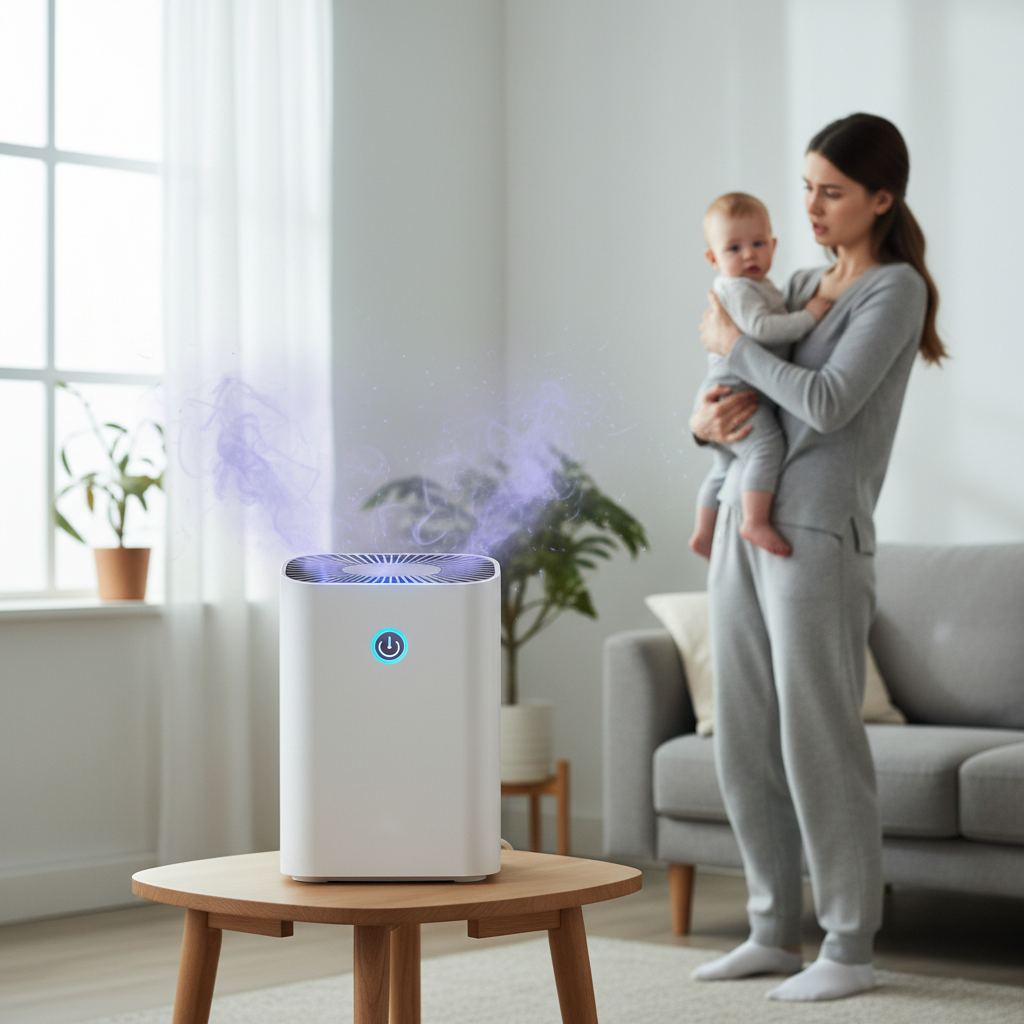
In the quest for cleaner indoor air, many homeowners turn to air purifiers, hoping to alleviate allergies, combat odors, and improve overall air quality. While these devices can be invaluable tools, the market is flooded with options, and not all purifiers are created equal. A common pitfall, especially when opting for cheaper models, is unknowingly introducing a new danger into your home: ozone. This guide delves into why some budget-friendly air purifiers can be hazardous, focusing on the silent threat of ozone gas and how to make a safe, informed choice for your family’s health.
Overview of Air Purifiers
An air purifier is an appliance designed to remove contaminants from the air in a room, improving indoor air quality. These devices typically draw air in, pass it through a series of filters or purification technologies, and then release cleaner air back into the environment. The fundamental principle is to trap or neutralize airborne particles, gases, and microorganisms.
The benefits of using air purifiers in homes and offices are numerous and significant. They can dramatically reduce the presence of allergens like pollen, dust mites, and pet dander, offering relief to allergy and asthma sufferers. Beyond allergens, purifiers tackle mold spores, bacteria, and viruses, contributing to a healthier living space. Many models also excel at eliminating unpleasant odors from cooking, pets, or smoke, leaving your environment feeling fresher. For those living in areas with high levels of outdoor pollution, an air purifier acts as a crucial barrier, safeguarding respiratory health by filtering out fine particulate matter (PM2.5) that can penetrate deep into the lungs.
Common Types of Air Purifiers
The market offers a diverse range of air purifiers, each employing different technologies to cleanse the air. Understanding these types is crucial to identifying potential risks, particularly concerning ozone.
HEPA Air Purifiers
HEPA (High-Efficiency Particulate Air) filters are the gold standard for trapping airborne particles. They work by forcing air through a fine mesh that traps particles such as pollen, pet dander, dust mites, and smoke.
- Advantages: Highly effective against a wide range of particulate matter, physically traps contaminants, and does not produce ozone.
- Disadvantages: Filters require periodic replacement, which incurs ongoing costs. Not effective against gases, odors, or volatile organic compounds (VOCs) on their own.
- Applications: Ideal for allergy and asthma sufferers, homes with pets, or anyone concerned about particulate pollution.
|
Our Picks for the Best Air purifier in 2026
As an Amazon Associate I earn from qualifying purchases.
|
||
| Num | Product | Action |
|---|---|---|
| 1 | LEVOIT Air Purifiers for Bedroom Home Dorm, AHAM VERIFIED, 3-in-1 Filter Cleaner With Aroma Pad, Filters Smoke, Allergens, Pet Dander, Odor, Dust, Office, Desktop, Core Mini-P, White |

|
| 2 | LEVOIT Air Purifier for Home Allergies Pet Hair in Bedroom, Covers Up to 1073 ft² by 56W High Torque Motor, AHAM VERIFIDE, 3-in-1 Filter with HEPA Sleep Mode, Remove Dust Smoke Odor, Core300-P, White |
|
| 3 | FreAire Air Purifiers for Bedroom Up to 1086 Ft², Air Purifiers for Home with Lights, HEPA Air Purifier Removes Dust Smoke Pollen Dander Smell, for Home/Pets/Bedroom |
|
| 4 | Air Purifiers for Home with High Efficiency Filter Up to 1076 Ft² for Pet Hair, Odors, Pollen, Smoke, Compact Air Cleaner with 3 Speeds, Timer, Aroma Quiet 360°Intake Filter, White |
|
| 5 | LEVOIT Air Purifiers for Home Large Room Up to 1875 Ft² with Washable Pre-Filter, AHAM VERIFIDE, Air Quality Monitor, HEPA Sleep Mode for Allergies, Pet Hair in Bedroom, Vital 200S-P, White |
|
| 6 | LEVOIT Air Purifier for Home Bedroom Dorm Room, Smart & Voice Control, AHAM VERIFIED, 3-in-1 Filter With HEPA Sleep Mode, for Pollen, Pollutants, Smoke, Dander, Dust, Core 200S-P, White |
|
| 7 | Air Purifiers for Home Large Room Cover Up to 1500 Ft² with True HEPA Filter, 20dB Sleep Mode, 360° Air Intake & Outlet, Air Cleaner for Bedroom Pets, 7 Color Light, HAP604, Bright White |
|
| 8 | KNKA Air Purifier for Home Bedroom Large Room Up to 1,695 Ft² in 1 Hr, HEPA Air Cleaner with Washable Pre-Filter, AHAM VERIFIDE, AQI Display, ECO Mode, Pet Mode for Pets, Dust, Pollen, APH4000 |
|
| 9 | LEVOIT Air Purifier for Home Large Room Up to 1073Ft² with Air Quality Monitor, AHAM VERIFIDE, Smart WiFi, Washable Pre-Filter, HEPA Sleep Mode for Pets, Allergies, Dust, Pollen, Vital 100S-P, White |
|
| 10 | Air Purifiers for Home Large Room, Cover Up to 2400 Ft² with True HEPA Filter, Smart Mode, PM2.5 Air Quality Display, 22dB Sleep Mode, Aromatherapy with 2X-Purification & 360°Air Outlet, HAP603 |
|
Activated Carbon Air Purifiers
Activated carbon filters are specifically designed to absorb gases, odors, and VOCs through a process called adsorption. They are often used in conjunction with other filter types.
- Advantages: Excellent at removing odors (smoke, cooking smells, pet odors), chemical fumes, and VOCs. Does not produce ozone.
- Disadvantages: Does not filter particulate matter effectively. Filters need regular replacement to maintain effectiveness.
- Applications: Best for kitchens, areas with strong odors, or environments where chemical pollutants are a concern.
Ionizing Air Purifiers
Ionizers work by releasing a stream of negatively charged ions into the air. These ions attach to airborne particles, making them too heavy to remain suspended, causing them to fall out of the air onto surfaces.
- Advantages: Can effectively reduce airborne particles without needing traditional filters.
- Disadvantages: A significant concern is that many ionizers can produce ozone as a byproduct. Ozone is a respiratory irritant and can be harmful to health. Also, particles don’t disappear but settle on surfaces, requiring more frequent cleaning.
- Applications: Often found in cheaper or older models aiming for filter-less operation, but their ozone production is a major drawback.
UV-C Light Air Purifiers
UV-C (ultraviolet-C) light purifiers use UV-C lamps to destroy microorganisms like bacteria, viruses, and mold spores by disrupting their DNA.
- Advantages: Effective at sterilizing airborne biological contaminants.
- Disadvantages: Less effective against dust, pollen, or chemical pollutants. Some UV-C lamps, especially cheaper or poorly designed ones, can generate ozone. The effectiveness is limited by exposure time; air needs to pass slowly over the lamp.
- Applications: Useful for areas prone to mold or where germ control is a priority, but careful selection is needed to avoid ozone-producing models.
Combination Air Purifiers
Many modern air purifiers integrate multiple technologies to offer a comprehensive purification solution. A common combination includes a HEPA filter for particulates and an activated carbon filter for gases and odors. Some higher-end models may also include UV-C light or non-ozone-producing ionizers for enhanced germ control.
- Advantages: Provides broad-spectrum air purification, tackling both particulate and gaseous pollutants, and often biological contaminants.
- Disadvantages: Can be more expensive to purchase and maintain due to multiple filter types and technologies.
- Applications: Ideal for comprehensive indoor air quality improvement in various settings, offering the best of different worlds without the ozone risk if properly chosen.
Comparison of Common Air Purifier Types
Understanding the trade-offs between different air purifier technologies is key to making an informed decision. The table below provides a quick comparison across several critical criteria, with a particular focus on the potential for ozone generation.
| Feature | HEPA Filter | Activated Carbon Filter | Ionizing Purifier | UV-C Purifier | Combination Unit |
|---|---|---|---|---|---|
| Pollutants Removed | Particles (dust, pollen, pet dander) | Gases, odors, VOCs | Particles | Bacteria, viruses, mold | Particles, gases, odors, VOCs, microorganisms |
| Ozone Production | None | None | Potential (High) | Potential (Moderate) | None (if designed well) |
| Effectiveness | High for particles | High for gases | Moderate for particles | Moderate for microorganisms | High for all targeted pollutants |
| Filter Lifespan | 6-12 months | 6-12 months | N/A (collection plate) | 10,000 hours (bulb) | Varies by filter type |
| Maintenance | Filter replacement | Filter replacement | Plate cleaning, occasional replacement | Bulb replacement | Multiple filter/bulb replacements |
| Noise Level | Moderate to High | Low to Moderate | Very Low | Very Low | Moderate to High |
| Energy Consumption | Moderate | Low | Low | Very Low | Moderate |
| Initial Cost | Moderate | Moderate | Low | Low to Moderate | High |
| Ongoing Cost | Filter replacement | Filter replacement | Minimal | Bulb replacement | Higher (multiple replacements) |
“When evaluating air purifiers, always prioritize models that explicitly state they are ozone-free, especially if they incorporate technologies like ionization or UV-C. Your respiratory health depends on it.” – Dr. Emily R. Chen, Environmental Health Specialist
Critical Criteria When Choosing an Air Purifier
Selecting the right air purifier involves more than just picking a brand. Several factors play a crucial role in its effectiveness, safety, and suitability for your specific needs.
Room Size and CADR (Clean Air Delivery Rate)
The effectiveness of an air purifier is directly tied to its ability to clean the air in a given space. It’s essential to match the purifier’s capacity to your room size. The Clean Air Delivery Rate (CADR) is a key metric, indicating how quickly the purifier removes specific pollutants (smoke, pollen, dust) from a room. A higher CADR means faster cleaning. Always choose a model with a CADR rating appropriate for the square footage of your room to ensure optimal performance.
Filter Types and Contaminant Removal Capability
Different filters target different types of pollutants.
- HEPA filters are vital for capturing fine particulate matter like dust, pollen, pet dander, and mold spores.
- Activated carbon filters are necessary for eliminating odors, gases, and volatile organic compounds (VOCs) such as formaldehyde and benzene.
- Some purifiers include pre-filters to trap larger particles, extending the life of the main filters.
- Be wary of technologies that claim to purify without filters, as these often come with the risk of ozone production. Always look for multi-stage filtration that includes both HEPA and activated carbon for comprehensive purification without dangerous byproducts.
Noise Level
Air purifiers are often intended for continuous operation, so noise level is a significant consideration, especially for bedrooms or offices. Manufacturers usually provide noise ratings in decibels (dB). Look for models with a low decibel rating, ideally below 50 dB on their highest setting and even lower for quiet modes, to ensure it doesn’t disrupt your daily activities or sleep.
Additional Features
Modern air purifiers come with a host of convenient features that can enhance their usability and effectiveness.
- Dust sensors automatically adjust fan speed based on air quality.
- Timers allow you to schedule operation.
- Remote control or smart connectivity (Wi-Fi, app control) offers convenient operation from anywhere.
- Other features like sleep modes, filter replacement indicators, and child locks can add significant value.
Brand and Reliability
Reputable brands often invest more in research, quality control, and testing to ensure their products are safe and effective. They are also more likely to provide accurate CADR ratings and explicitly state if their products are ozone-free, often supported by certifications like California Air Resources Board (CARB) compliance. Investing in a known brand typically means better customer support and warranty policies.
Price and Warranty Policy
While budget is a factor, compromising on safety for a lower price can be detrimental. Cheap air purifiers, especially those incorporating ionizers or UV-C without proper safeguards, are more likely to generate harmful ozone. Consider the long-term cost, including filter replacements. A good warranty policy reflects the manufacturer’s confidence in their product and offers peace of mind. Compare not just the upfront cost, but also the total cost of ownership over several years.
Buying Guide: How to Choose the Right Air Purifier
Navigating the multitude of options can be daunting, but a systematic approach ensures you select a purifier that meets your needs without compromising health.
Determine Your Usage Needs
Start by identifying what you need the air purifier for. Are you primarily dealing with pet allergies, asthma, smoke, general dust, or a combination? Do you have young children, elderly individuals, or people with compromised immune systems in the household? For instance, allergy sufferers will prioritize models with robust HEPA filtration, while those concerned about chemical odors will need strong activated carbon filtration. If you have any medical conditions, consult your doctor for specific recommendations.
Select an Air Purifier Type Suited for Room Size
Once you know your needs, measure the square footage of the room where the purifier will be placed. Check the manufacturer’s recommended room size and CADR ratings for different models. Always opt for a purifier that slightly exceeds your room’s requirements rather than falling short, as this allows it to clean the air more efficiently, especially on lower, quieter settings.
Research Filtration Technologies and Effectiveness
Dive deeper into the specific technologies used in potential purifiers. Focus on models that utilize true HEPA and activated carbon filters. Critically, ensure any model you consider is certified ozone-free. Look for certifications like CARB (California Air Resources Board) compliance, which verifies that the device produces negligible or no ozone. Be highly skeptical of purifiers that rely solely on ionizers or UV-C light without explicit ozone-free certification, as these are the most common culprits for ozone generation, particularly in cheaper units.
Compare Products Based on Features, Price, and Brand
Create a shortlist of purifiers that meet your filtration and room size requirements. Then, compare them based on additional features, noise levels, energy consumption, initial price, and the long-term cost of filter replacements. Evaluate the reputation of the brands on your list, looking for established manufacturers with a history of reliable products and good customer service.
Read User Reviews and Expert Opinions
Before making a final decision, consult a variety of sources. Read independent user reviews on reputable retail sites to get real-world insights into a product’s performance, durability, and any potential issues. Look for consistent feedback regarding noise, effectiveness, and filter longevity. Also, seek out expert reviews from trusted consumer organizations or environmental health websites for unbiased assessments and performance test results.
Purchase from Reputable Retailers
Finally, buy your air purifier from authorized dealers or reputable online retailers. This ensures you receive a genuine product with a valid warranty. Avoid purchasing from unknown third-party sellers, especially for cheaper models, as there’s a higher risk of receiving counterfeit products or those that do not meet safety standards and could potentially generate harmful ozone.
Top Picks: Best Air Purifiers (By Price Segment)
Choosing an air purifier involves balancing performance, features, and budget. Here are general recommendations by price segment, focusing on ozone-free options. (Note: Specific model recommendations would require current market research, but this provides a framework.)
Budget-Friendly Segment (Under $150)
In this segment, focus on basic, reliable HEPA + Activated Carbon filtration. Look for brands known for entry-level reliability.
- Key features to look for: True HEPA filter, activated carbon layer, quiet operation on low settings, basic controls, CARB-certified.
- What to avoid: Models relying heavily on ionization or UV-C without clear ozone-free certification.
Mid-Range Segment ($150-$350)
This segment offers a good balance of performance, features, and value. You can expect better CADR ratings, more advanced features, and improved build quality.
- Key features to look for: Higher CADR for medium-sized rooms, multi-stage filtration (True HEPA, activated carbon, possibly pre-filter), smart features (auto mode, air quality sensor), moderate noise levels, reputable brand, CARB-certified.
- Potential upgrades: Slightly more robust filter systems, better aesthetic design.
Premium Segment (Above $350)
High-end purifiers provide superior performance, often for large spaces, with advanced features and sophisticated designs.
- Key features to look for: Excellent CADR for large rooms or open-plan areas, highly efficient multi-stage filtration with substantial activated carbon, advanced smart features (app control, integration with smart home systems), ultra-quiet operation, premium build quality, long-lasting filters, strong warranty, CARB-certified.
- Potential technologies: Advanced particulate sensors, specialized filters for specific pollutants, minimalist design.
How to Use and Maintain Your Air Purifier
Proper usage and regular maintenance are vital to ensure your air purifier operates effectively and safely for years to come.
Effective Air Purifier Usage
To maximize the benefits of your air purifier, place it in the room where you spend the most time, such as your bedroom or living room. Ensure there’s adequate space around the unit for air intake and outflow, typically 6-12 inches from walls or furniture. For continuous purification, it’s best to run your air purifier on a medium to high setting whenever you are in the room, and perhaps on a lower, quieter setting when you’re away or sleeping. Keep windows and doors closed in the room you are purifying to prevent new pollutants from entering and to help the purifier work more efficiently.
Regular Cleaning and Filter Replacement
Filters are the heart of an air purifier, and their effectiveness diminishes over time as they become saturated with pollutants. Always follow the manufacturer’s recommendations for filter replacement intervals, which typically range from 6 to 12 months for HEPA and activated carbon filters, depending on usage and air quality. Ignoring filter replacement can lead to reduced purification efficiency, increased energy consumption, and in some cases, can even re-release trapped pollutants. Additionally, periodically clean the exterior of the unit and any pre-filters (if washable) to remove accumulated dust.
Important Usage Considerations
While air purifiers are generally safe, there are a few things to keep in mind. Never block the air intake or output vents. Avoid placing the purifier in excessively humid environments unless it’s specifically designed for such conditions, as this can damage filters and internal components. Always unplug the unit before cleaning or replacing filters to prevent accidental operation. If your air purifier has an ionizer or UV-C lamp, ensure it is certified ozone-free and regularly check for any unusual smells that might indicate ozone production.
Frequently Asked Questions
What are the main dangers of cheap air purifiers?
The primary danger of many cheap air purifiers, especially those that rely heavily on older ionization or UV-C technologies, is the production of ozone. Ozone is a known lung irritant that can exacerbate respiratory conditions like asthma, cause coughing, chest pain, and shortness of breath, and potentially damage lung tissue over time, even at low levels.
How can I tell if my air purifier is producing ozone?
A common indicator of ozone production is a distinct, bleach-like or “electrical” smell, often described as similar to a photocopier, particularly when the purifier is running. To be absolutely sure, check if the model is certified as ozone-free by organizations like the California Air Resources Board (CARB). If a purifier advertises itself as an “ozone generator” or “ionizer” without proper certification, it’s highly likely to produce ozone.
Are all ionizers and UV-C purifiers dangerous?
Not necessarily, but caution is advised. While older or cheaper ionizers and UV-C lamps can produce ozone as a byproduct, many modern, reputable brands have developed advanced ionizers and UV-C systems that minimize or eliminate ozone emission. Always look for explicit “ozone-free” certification or CARB compliance when considering purifiers with these technologies.
What is CARB certification and why is it important?
CARB (California Air Resources Board) certification is a standard that ensures air cleaning devices sold in California (and often used as a benchmark elsewhere) meet specific requirements for not producing harmful levels of ozone. An air purifier with CARB certification has been tested and deemed safe regarding ozone emissions, making it a reliable indicator of an ozone-free product.
Can air purifiers help with viruses and bacteria?
Yes, air purifiers equipped with true HEPA filters can capture airborne particles that carry viruses and bacteria. Additionally, some purifiers incorporate UV-C light or other technologies specifically designed to neutralize microorganisms. However, their effectiveness varies, and they should be part of a broader hygiene strategy, not a sole defense.
How often should I replace the filters in my air purifier?
Filter replacement frequency depends on the filter type, usage intensity, and the level of air pollution in your environment. Generally, HEPA and activated carbon filters need to be replaced every 6 to 12 months. Pre-filters might be washable and reusable, while UV-C bulbs usually last for several years. Always refer to your purifier’s user manual for specific recommendations.
Is it safe to run an air purifier all the time?
Yes, it is generally safe and often recommended to run your air purifier continuously, especially if you have allergies, asthma, or live in a polluted area. Modern air purifiers are designed for continuous operation and are energy-efficient. Running it constantly ensures consistent removal of pollutants and maintenance of good indoor air quality.
Conclusion
Choosing an air purifier is an investment in your health and home environment. While the allure of cheaper models can be strong, it’s crucial to be aware of the potential hidden dangers, particularly the silent threat of ozone gas. Prioritizing models with certified ozone-free claims, robust HEPA and activated carbon filtration, and reputable brand backing will ensure you’re bringing truly clean air into your space, not an unseen hazard. By understanding the technologies, recognizing the risks, and making informed decisions, you can confidently select an air purifier that provides genuine health benefits without compromise. What steps will you take today to ensure the air you breathe is as safe as possible?